Is 25% Similarity on Turnitin Bad? How to Read Your Score the Way Your Professor Does
A 25% Turnitin score is not automatically bad — and it's not automatically fine. What matters is what's driving the number. Here's how professors actually read the report, and when you should and shouldn't worry.
You submitted your essay and the Turnitin Similarity Report came back at 25% — or 28%, or 32%. You are now staring at a number that feels high but you are not sure if it actually is. The honest answer is: a 25% similarity score is not automatically bad, and it is not automatically fine either. What matters is what is driving that 25%, not the number itself. Here is how to read your score the way your professor does — and when to start worrying.
Turnitin has no universal threshold
The first thing to understand is that Turnitin does not define a “safe” or “failing” similarity percentage. Turnitin's own documentation explicitly states: “The similarity score alone cannot determine whether a submission constitutes plagiarism.” The score tells you what percentage of your text matched something in the database — it does not tell you whether that matching text was properly cited, whether it was a quotation, or whether it is a common phrase that appears across many academic papers.
Every institution, department, and instructor sets their own expectations. Some apply a blanket 20% limit. Others allow 40% in heavily cited literature reviews. Others have no numerical threshold at all and simply review whatever comes up. Unless your assignment brief or syllabus specifies a number, you cannot compare your score to a generic standard.
What your professor actually looks at
Professors who understand Turnitin do not look at the percentage first. They open the full Similarity Report and read the matched sources — asking themselves these questions:
- Are the matches properly cited? A 30% score made up entirely of correctly attributed quotations and properly referenced material is not a problem. The same 30% score made up of uncited paraphrases from three sources is a serious one.
- Are the matches common academic phrases? Discipline-specific language — standard methodology descriptions, technical terms, common formulaic phrases — will always match across papers. These inflate the score without indicating any misconduct.
- Does the bibliography exclusion filter change the picture? A long reference list can add 5–15 percentage points to a similarity score. Professors who know what they are doing toggle this filter off to see the body-of-work score without the reference list.
- Is one source driving the score? A 25% score with 20% coming from one unattributed source is a very different situation from a 25% score spread across 15 different small matches from cited sources.
Our guide on understanding your Turnitin similarity score explains exactly how to use the exclusion filters and source breakdown to interpret your report properly.
How scores break down by colour
When you open a Similarity Report, the overall percentage is displayed in a coloured band that gives a rough visual guide:
- Blue (0%) — no matching text found
- Green (1–24%) — low similarity, very likely fine depending on context
- Yellow (25–49%) — moderate similarity, warrants review
- Orange (50–74%) — high similarity, likely to raise concerns
- Red (75–100%) — very high similarity, will almost certainly trigger a review
A 25% score sits right on the boundary between green and yellow — the threshold where it moves from “probably fine” to “worth checking.” That boundary is why 25–30% scores generate so much anxiety. The colour is a starting point for your professor's attention, not a verdict.
How discipline changes everything
What constitutes a normal similarity score varies enormously by subject:
- STEM and sciences. Lab reports, methodology sections, and technical papers use highly standardised language. A 30–40% score driven by shared methodology descriptions and standard procedures is normal and expected. Professors in these disciplines typically care far more about whether data is attributed correctly than about similarity percentages.
- Law. Legal essays quote statutes, case law, and established legal definitions extensively. Similarity scores of 30–50% are common in law assignments and are largely driven by properly cited legal sources.
- Humanities and social sciences. These disciplines involve more original argument and less technical standardisation, so lower scores are generally expected. A 25% score here warrants a closer look at what the matches are.
- Literature reviews and dissertations. These involve synthesising large amounts of existing research, so scores above 20% are not unusual — but the sources driving those matches must all be properly cited.
When 25% is actually fine
A 25% similarity score is genuinely not concerning when:
- The bulk of the matches are your own reference list (toggle the bibliography filter to check)
- Matched passages are direct quotations with proper citation
- Matches are small fragments — a few words — spread across many different sources, not large blocks from one source
- The matching phrases are standard terminology or boilerplate academic language that anyone writing in your field would use
- Your assignment is a literature review or research-heavy paper where source integration is expected
When 25% is a problem
The same score is concerning when:
- A large portion of it comes from one or two sources that are not cited in your reference list
- Matched passages are full sentences or paragraphs, not short phrases
- After toggling off the bibliography and quote exclusion filters, the score does not drop significantly — meaning the matches are in your body text, not in your citations
- The matched sources are ones you actually used but did not reference — accidental plagiarism still counts
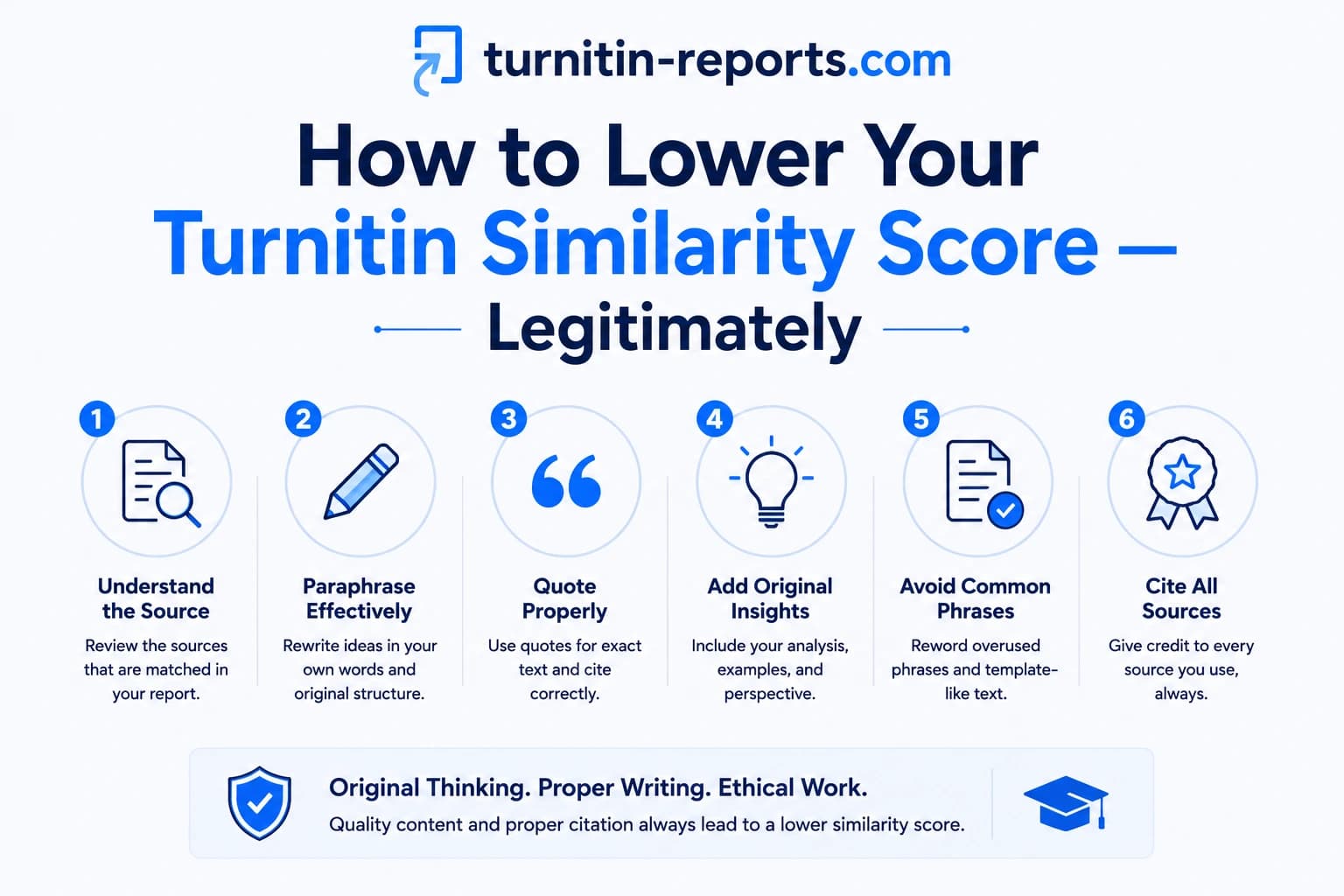
If your score is in this territory, our guide on how to lower your Turnitin similarity score covers the specific techniques that actually reduce it — not just synonym swapping, which rarely helps.
What to do right now
If you have a 25–35% score and you are unsure whether it is a problem:
- Open the full Similarity Report and toggle on the bibliography exclusion filter. Note how much the score drops.
- Look at the source breakdown — which sources are driving the matches, and are they in your reference list?
- Click on each highlighted passage to see the matched source. Are these citations you have included, or matches you did not expect?
- Check your assignment brief for any specific similarity threshold your institution requires. If none is stated, the score itself is not the issue — the context is.
- If you are still unsure, email your instructor and ask. Showing that you have reviewed your report and have questions about specific matches demonstrates good academic practice — not guilt.
Frequently asked questions
Is 25% similarity on Turnitin bad?
Not necessarily. A 25% score sits at the boundary between green and yellow on the Turnitin colour scale — it warrants a review but is not automatically a problem. What matters is what is driving the score: properly cited quotations and references are fine at any percentage, while uncited paraphrases from sources you actually used are a concern even at 10%. Open the full report and check the source breakdown before drawing any conclusions.
What is an acceptable Turnitin similarity score?
There is no universal acceptable percentage. Turnitin does not define one, and thresholds vary by institution, department, and assignment type. STEM and law assignments routinely see higher scores due to standardised language and extensive citation. Humanities assignments at the same institution might have lower expected scores. Check your assignment brief or ask your instructor if no threshold is stated.
Does Turnitin automatically report a 25% similarity score to my professor?
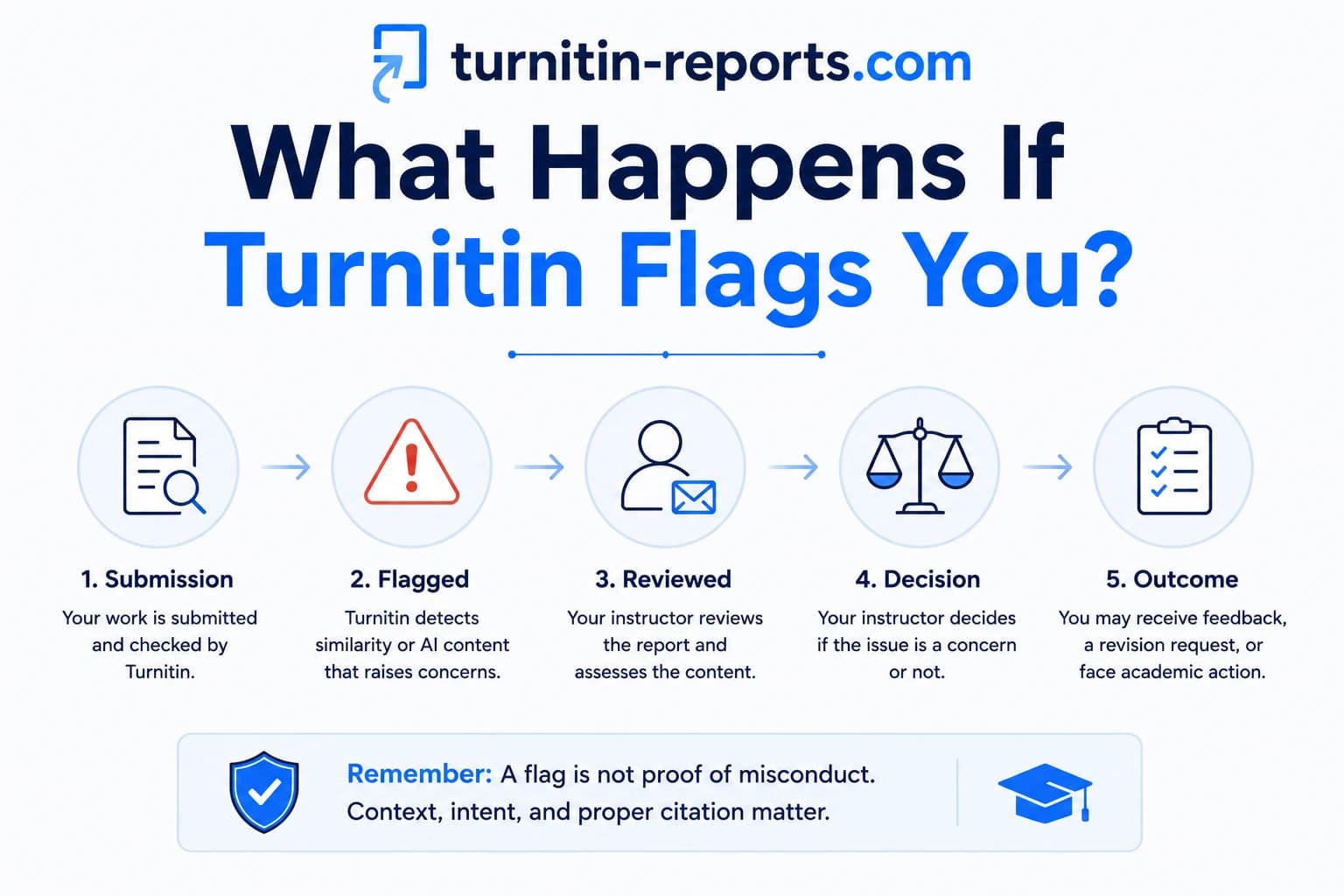
No. Turnitin does not flag or escalate scores automatically. Your professor sees the report when they choose to review it, and they see all submissions — not just ones above a certain threshold. Whether a 25% score leads to any action depends entirely on what is in the report and how your professor interprets it. The number itself does not trigger a referral.
My score is 25% but most of it is my reference list — is that okay?
Almost certainly yes. A reference list typically inflates similarity scores by 5–15 percentage points because the publication titles, author names, and journal names match Turnitin's academic database. Toggle the bibliography exclusion filter in your report to see your body-of-work score without the reference list. If your score drops to 10–15% after filtering, the report is very unlikely to raise concerns.
Ready to check your paper?
Get your Turnitin report in minutes.
Same report your institution generates — delivered privately, fast.