Can You Dispute a Turnitin Plagiarism Finding?
You cannot appeal to Turnitin directly — the company has no dispute mechanism. But you absolutely can dispute the institutional finding built on top of their report, and appeals succeed in over 60% of documented cases when properly evidenced. Here is exactly how.
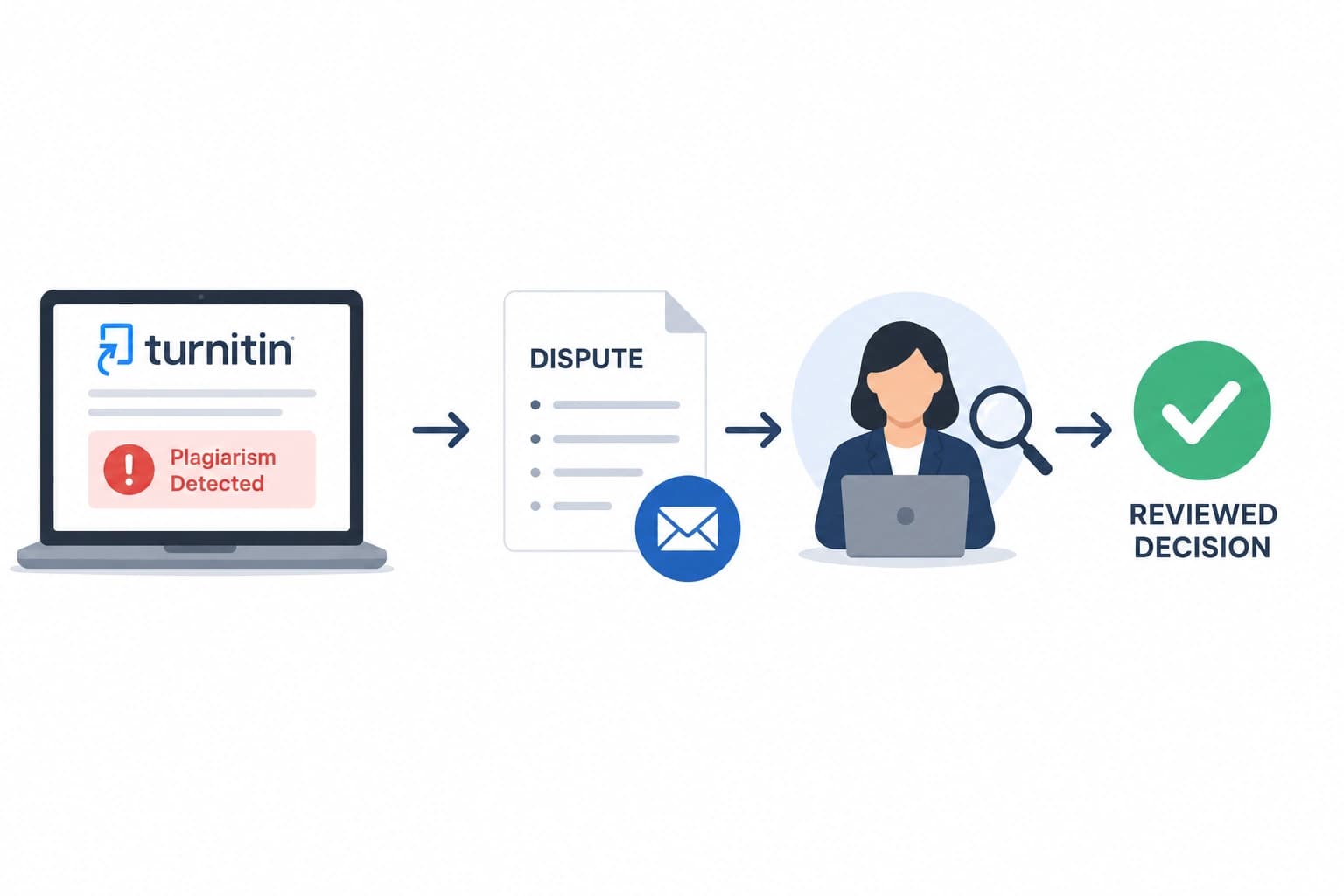
When a Turnitin report comes back flagging your work, the first question most students ask is whether they can dispute it. The honest answer is: it depends on what exactly you are trying to dispute. Students cannot challenge Turnitin's score directly — Turnitin the company has no appeals process. But students absolutely can — and often successfully do — dispute the institutional finding built on top of that score. That distinction is the most important thing to understand before you do anything else.
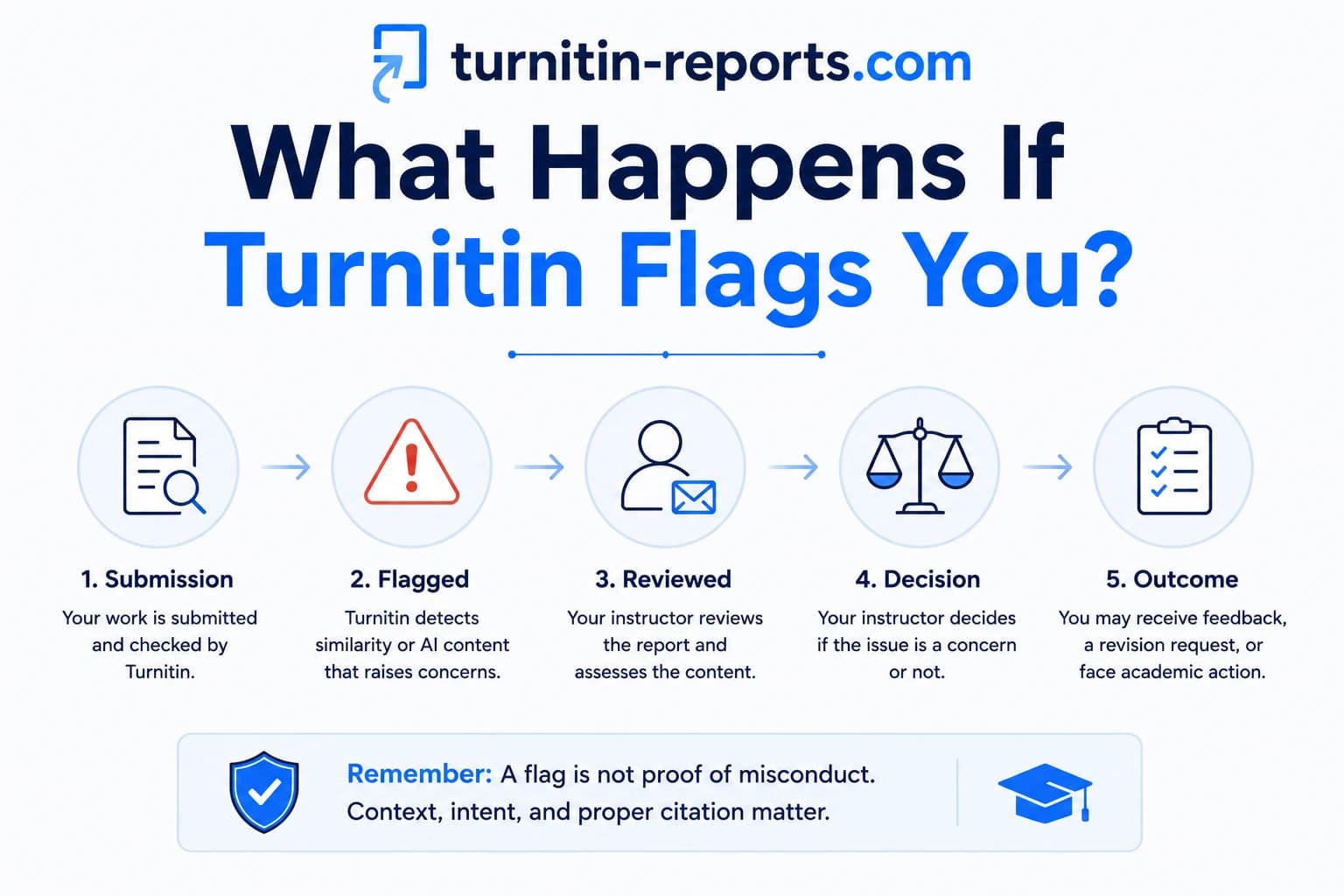
If you are trying to understand what happens when Turnitin flags you in the first place, read that guide first. This post picks up at the point where a finding has been made — or is about to be — and walks through every option available to you.
Score vs. finding: what you're actually disputing
Turnitin produces two things relevant to a misconduct allegation: a Similarity Report (how much of your text matches its database) and an AI Writing Report (the percentage of your text assessed as likely AI-generated). Both are algorithmic outputs produced by a proprietary system. Neither is a finding of misconduct. Neither can be formally appealed to Turnitin.
The misconduct finding is a separate thing entirely. It is the decision made by a human being — your instructor, an academic integrity officer, or a panel — that your submission violated your institution's academic integrity policy. That decision is made by your institution, governed by your institution's policy, and subject to your institution's appeals process. It is this finding that you can dispute.
This distinction matters practically. There is no point writing to Turnitin's support team asking them to review your score or change their report. They will not do it — the score is what it is, and Turnitin does not adjudicate academic misconduct. What you are actually doing when you “dispute a Turnitin finding” is challenging your institution's interpretation and use of that report. For understanding similarity scores themselves — what the numbers mean, what counts as high — that context is essential before you frame your appeal.
Turnitin the company has no appeals process
This surprises many students, but it is explicit in how Turnitin positions itself. Turnitin's own documentation on its AI writing detection states clearly that the AI Writing Report is a tool to prompt conversation — not a determination of misconduct. Turnitin produces the report. Universities decide what to do with it.
Turnitin's customer is your institution, not you. The company has no mechanism for an individual student to file a dispute, request a rescore, or ask for a report to be amended. If you contact Turnitin directly, they will direct you back to your institution. This is not a gap in their process — it is by design. Turnitin has deliberately positioned itself as a tool provider rather than a decision-maker, partly because taking on a quasi-judicial role would create significant legal exposure.
What this means for you: every minute you spend trying to get Turnitin to change their output is time not spent building the case that will actually succeed — the appeal to your institution.
Yes — you can dispute the institutional finding
Every accredited university in the United States, United Kingdom, Australia, and Canada is required to have a documented academic integrity or student conduct process that includes the right to respond before a finding is made and the right to appeal after one. This is not a courtesy — it is a due process requirement embedded in accreditation standards and, in many cases, in national law or university charter.
Harvard's academic integrity policy, for example, gives students the right to be informed of the nature of any allegation, to respond before any finding, and to appeal any adverse finding. Most institutions follow the same structure. Your institution's academic integrity policy — usually published on its website — will describe the exact process.
Appeals succeed. In cases with proper documentation, the success rate is over 60%. When version history is provided, that rises to 70–80%. These are not long shots — they are the normal outcome of a properly evidenced appeal.
Grounds for a successful appeal
Academic misconduct appeals are not simply about insisting you did not cheat. They succeed when they identify a specific, articulable reason why the finding should not stand. The five strongest grounds:
- Procedural error. Your institution failed to follow its own documented process. Examples include: not giving you written notice of the allegation, not allowing you time to respond before a finding was made, the wrong person or panel making the decision, or a deadline not being communicated clearly. Procedural errors are the strongest ground — if the institution did not follow its own rules, the finding is vulnerable regardless of the underlying evidence.
- New evidence. Evidence that was not available at the time of the initial finding — most commonly Google Docs version history that was not requested, or research notes that were not submitted. If the initial hearing proceeded without asking for process evidence, this is a valid ground to introduce it at the appeal stage.
- Disproportionate penalty. The sanction imposed is excessive relative to the nature and severity of the alleged violation, especially for a first offence. Most institutional policies include a proportionality requirement — a minor unintentional citation error should not carry the same penalty as deliberate submission of purchased work.
- False positive — competing evidence. Independent AI detectors (GPTZero, Copyleaks) show a materially different result. If the institution used a single Turnitin AI score as the primary or sole evidence and competing tools show a substantially lower score, the reliability of the finding is genuinely in question.
- Score used as sole evidence, violating Turnitin's own guidance. Turnitin's published guidance explicitly states that the AI Writing Report score should not be the sole basis for adverse action. If your institution used the score as sole or primary evidence without corroboration, this directly contradicts the guidance of the tool they relied on. This argument has prevailed in court.
Evidence that wins appeals
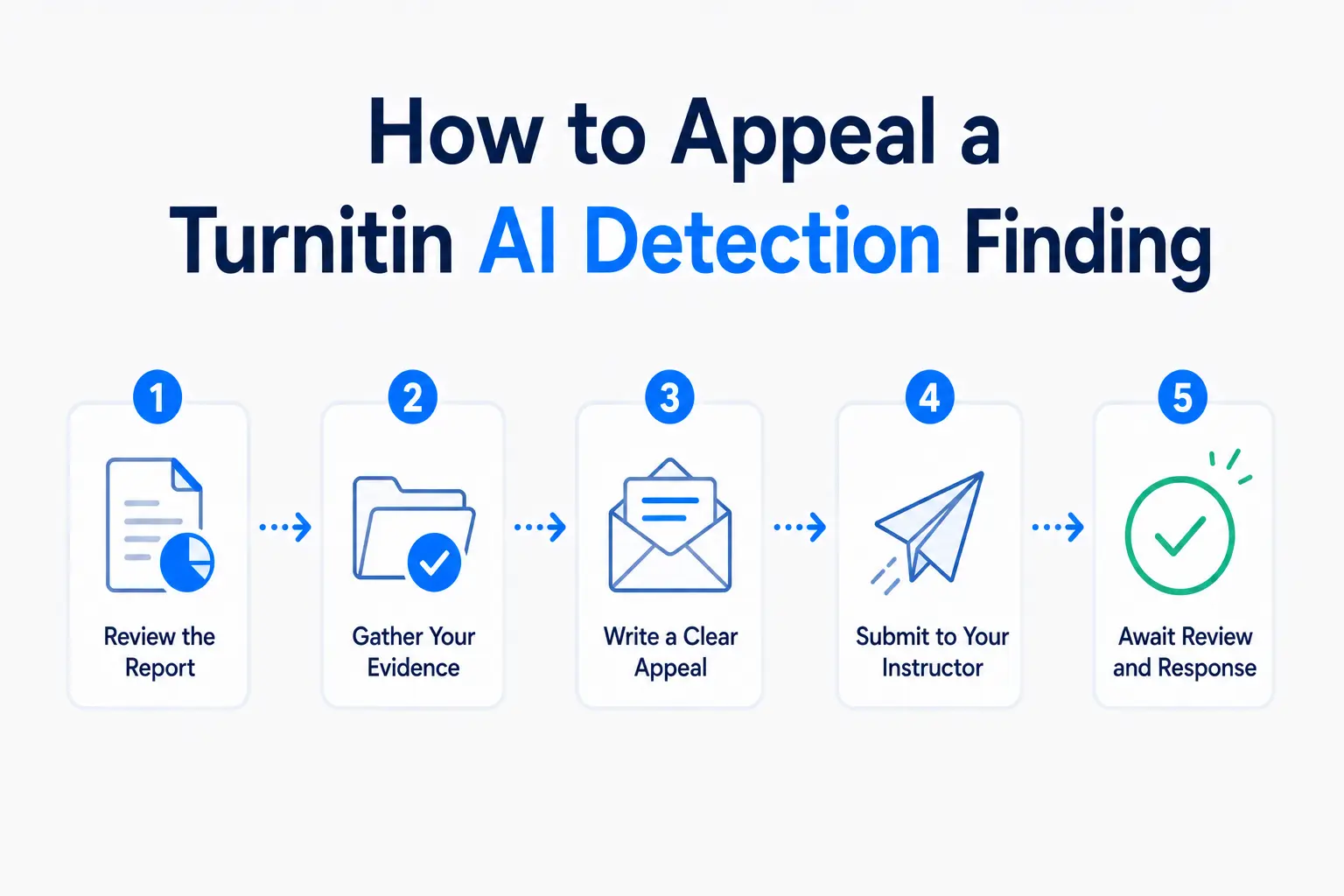
The most successful appeals share a common structure: they tell a coherent, documented story of the student's writing process that makes it implausible the work was produced by AI or copied from another source. Build this story with the following:
- Google Docs or Word version history (strongest evidence). A document showing dozens of separate editing sessions across multiple days, with the text evolving incrementally, is extremely difficult to fabricate retroactively. Export this as a PDF or take detailed screenshots showing timestamps and the progression of the document. This single piece of evidence changes the outcome of most appeals. If you wrote in Google Docs, go to File → Version History → See version history immediately — before anything else.
- Research notes and annotated sources. Handwritten notes, annotated PDFs of your sources, highlighted readings, or browser history from your research period. These show you engaged with source material rather than asking an AI to do it for you.
- Early drafts and outlines. Rough first drafts, bullet-point outlines, and planning documents show the messy reality of genuine writing. AI generation does not produce half-formed first drafts with crossed-out ideas and contradicted sections.
- Independent AI detector results. Run your submission through GPTZero and Copyleaks and save the full results. If these tools show a substantially different result from Turnitin, that disagreement is directly relevant to the reliability of the institutional finding.
- Writing center records. If you visited a writing center or tutoring service during the assignment, request a record of that visit. It is independent evidence of your engagement with the work.
- Turnitin's own guidance. Print or download Turnitin's published documentation stating the AI score should not be sole evidence of misconduct. Many instructors and panel members are not aware of this guidance, and presenting it formally can shift the burden of proof back toward the institution.
If you can check your score before submitting, do so — it allows you to identify flagged passages while you still have time to address them, rather than reacting to them after the fact.
The appeals timeline — deadlines matter
Academic integrity appeals operate on strict deadlines. Miss the window and you typically forfeit the right to appeal at that stage. The general structure:
- Instructor-level response. Usually 5–10 working days from receiving notice of a concern. This is your first opportunity to present evidence informally before any formal finding is made.
- Formal hearing response. If the case escalates to an academic integrity office or panel, you will receive a formal notice. Response windows are typically 5–15 working days. Read the notice carefully — the deadline will be specific.
- Post-finding appeal. After a formal adverse finding is issued, appeal deadlines are typically 10–20 working days from the date of the decision letter. This window is often shorter than students expect.
- Secondary appeal. Many institutions allow a second appeal to a higher body (provost, senate committee, or external ombudsman). Deadlines for this stage vary but are typically no longer than 20 working days.
International students face an additional urgency. If your institution updates SEVIS (US), CAS (UK), or equivalent immigration reporting before you complete your appeal, your visa status may be affected regardless of the appeal outcome. File your appeal — and explicitly request that any immigration reporting be paused pending its resolution — before the institution sends any reporting. Do not assume you have time to appeal first and address immigration later.
Advocates, ombudsmen, and legal advice
You do not have to navigate the appeal process alone. Most universities have at least one of the following:
- Student ombudsman. An independent officer who can advise you on the process, review your case informally, and identify whether your institution has followed its own procedures. Using the ombudsman is not an admission of anything and does not create a formal record.
- Student union or association advocate. Most student unions offer free academic advocacy services for misconduct cases. These advocates have experience with your institution's specific process and can help you draft your appeal statement.
- External civil liberties organisations. The Foundation for Individual Rights in Education (FIRE) provides free legal assistance to students facing due process violations at US institutions. They have intervened in AI detection cases and can advise on your rights.
- Education law firms. For serious sanctions — suspension, expulsion, or transcript notation — a consultation with an education law firm is worth the cost. The legal landscape has shifted significantly in students' favour since the Orion Newby case, and institutions are increasingly aware of their legal exposure.
Disputing an AI detection false positive specifically
AI detection disputes have a slightly different structure from traditional plagiarism appeals, because they rest on challenging the reliability of a probabilistic tool rather than on showing that matching text was cited or permitted.
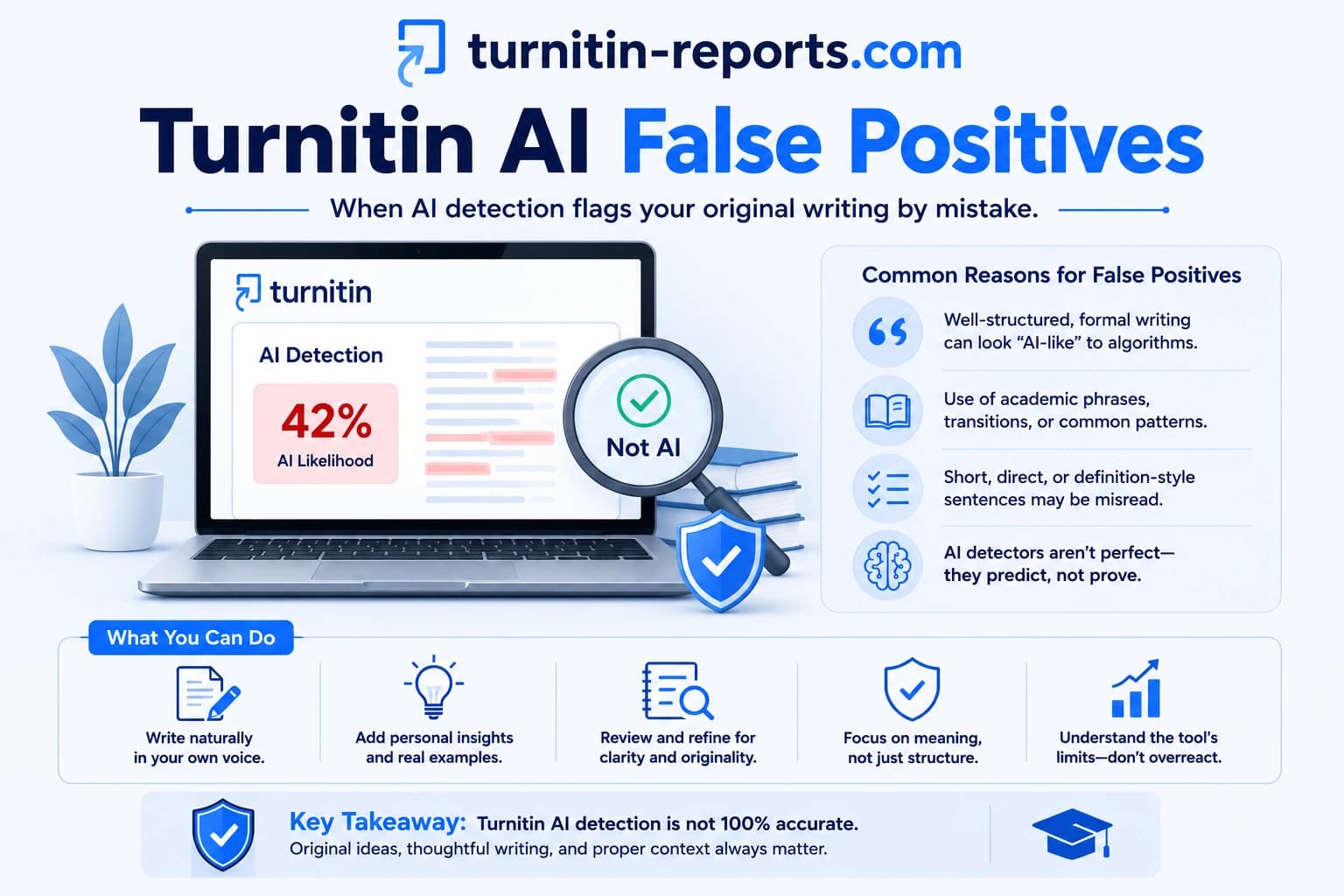
The core argument is straightforward: Turnitin's AI Writing Report is a statistical tool with a documented false positive rate. If you wrote the work yourself, the report is wrong. Your goal is to make that case with evidence. For a detailed guide to the full process, see our post on how to appeal a Turnitin AI detection finding, and if you need to understand the specific situation of Turnitin flagging your work as AI but you wrote it, that post covers the causes and responses in depth.
Several specific arguments carry particular weight in AI detection appeals:
- Non-native English speaker bias. Stanford HAI research measured a 61.3% false positive rate for non-native English speakers across AI detectors. If English is not your first language, this is a directly applicable precedent that your institution should be required to consider.
- Turnitin's own guidance contradicts sole reliance on the score. Turnitin's AI writing detection guidance is explicit: the score is a signal, not a finding. An institution that used the AI score as the primary or sole basis for a misconduct finding has arguably not followed the tool provider's own recommended use.
- Competing detectors disagree. Run your submission through GPTZero and Copyleaks. If these independent tools produce materially different results, the disagreement between multiple detectors is itself evidence that the Turnitin score is not reliable enough to carry a misconduct finding alone.
- The Orion Newby precedent. In February 2026, a New York state Supreme Court judge ruled that Adelphi University's reliance on a 100% Turnitin AI score was “without valid basis and devoid of reason” and ordered the student's academic record expunged. This is the first court ruling directly invalidating a Turnitin-based AI misconduct finding, and it establishes that courts will review whether an institution's reliance on an AI score met a basic standard of reasonableness.
For more detail on Turnitin AI false positives — including what causes them and how they vary by writing style — that post covers the technical side in full.
If the appeal fails: further escalation options
If your institution's internal appeals process does not resolve the matter in your favour, external options remain:
- Complaint to the accreditation body. In the US, regional accreditors can receive complaints from students about due process failures. This is a slow route but it places your complaint on the institution's formal regulatory record.
- State oversight agency. Most US states have a higher education oversight body that handles complaints about institutions operating within the state. These bodies can compel a response and, in some cases, an independent review.
- Legal action. The Orion Newby case demonstrated that courts will intervene where institutions rely on AI detection in ways that fail basic standards of reason and due process. Viable legal theories include breach of contract (your institution's own policies are a contract), due process violations (for public institutions), and, in some cases, consumer protection claims. The legal landscape is actively developing and the trajectory is toward greater student protection.
- FIRE. The Foundation for Individual Rights in Education has intervened in several AI detection cases and can provide free legal analysis and advocacy where due process rights have been violated.
Frequently asked questions
Can I appeal directly to Turnitin if I think their score is wrong?
No. Turnitin has no mechanism for students to dispute or appeal a score. The company produces the report; your institution makes the finding. Any dispute must go to your institution through its academic integrity process. Contacting Turnitin directly will not change the score and will not help your case.
What is the strongest evidence in a plagiarism appeal?
Google Docs or Word version history showing your document evolving across multiple sessions over multiple days is the most compelling single piece of evidence. A document with dozens of edit sessions spanning a week or more is nearly impossible to fabricate retroactively. Supplement it with research notes, early drafts, and independent AI detector results from GPTZero and Copyleaks. A layered case built on multiple evidence types succeeds far more reliably than a single argument.
What percentage of plagiarism appeals succeed?
Documented success rates vary by institution and case type, but appeals with proper supporting evidence succeed in over 60% of cases. When Google Docs or Word version history is provided, success rates rise to 70–80%. Appeals with no supporting evidence succeed in fewer than 30% of cases. Evidence quality is the primary determinant — not the strength of verbal denials.
What does the Orion Newby case mean for students?
The February 2026 ruling in Orion Newby v. Adelphi University established that courts will review whether an institution's reliance on a Turnitin AI score met a basic standard of reasonableness. The judge found that using a 100% AI score as the basis for a misconduct finding — without corroborating evidence and against the student's submission of contradicting evidence — was “without valid basis and devoid of reason.” The university was ordered to expunge the student's academic record. For students facing serious sanctions based primarily on an AI score, this ruling is directly relevant and worth citing explicitly in an appeal.
How do I dispute a Turnitin AI detection finding specifically?
Collect version history from Google Docs or Word, run the submission through GPTZero and Copyleaks and save the results, and gather any research notes or early drafts. In your appeal, cite Turnitin's own guidance that the AI score should not be sole evidence of misconduct, reference the Stanford research on false positive rates (particularly if English is not your first language), and present the competing detector results as evidence that the Turnitin score is not reliable enough to carry a finding alone. If the institution used the score as its primary evidence, explicitly argue that this violates Turnitin's own published guidance on how the tool should be used.
Ready to check your paper?
Get your Turnitin report in minutes.
Same report your institution generates — delivered privately, fast.
Related articles