How Universities Investigate Plagiarism After Turnitin Flags You
Turnitin is a data-collection tool. What happens next is a structured human process with defined stages, evidence standards, and student rights. Here is exactly how universities investigate plagiarism — from the instructor's first review to the academic integrity office, digital forensics, intent assessment, and final outcome.
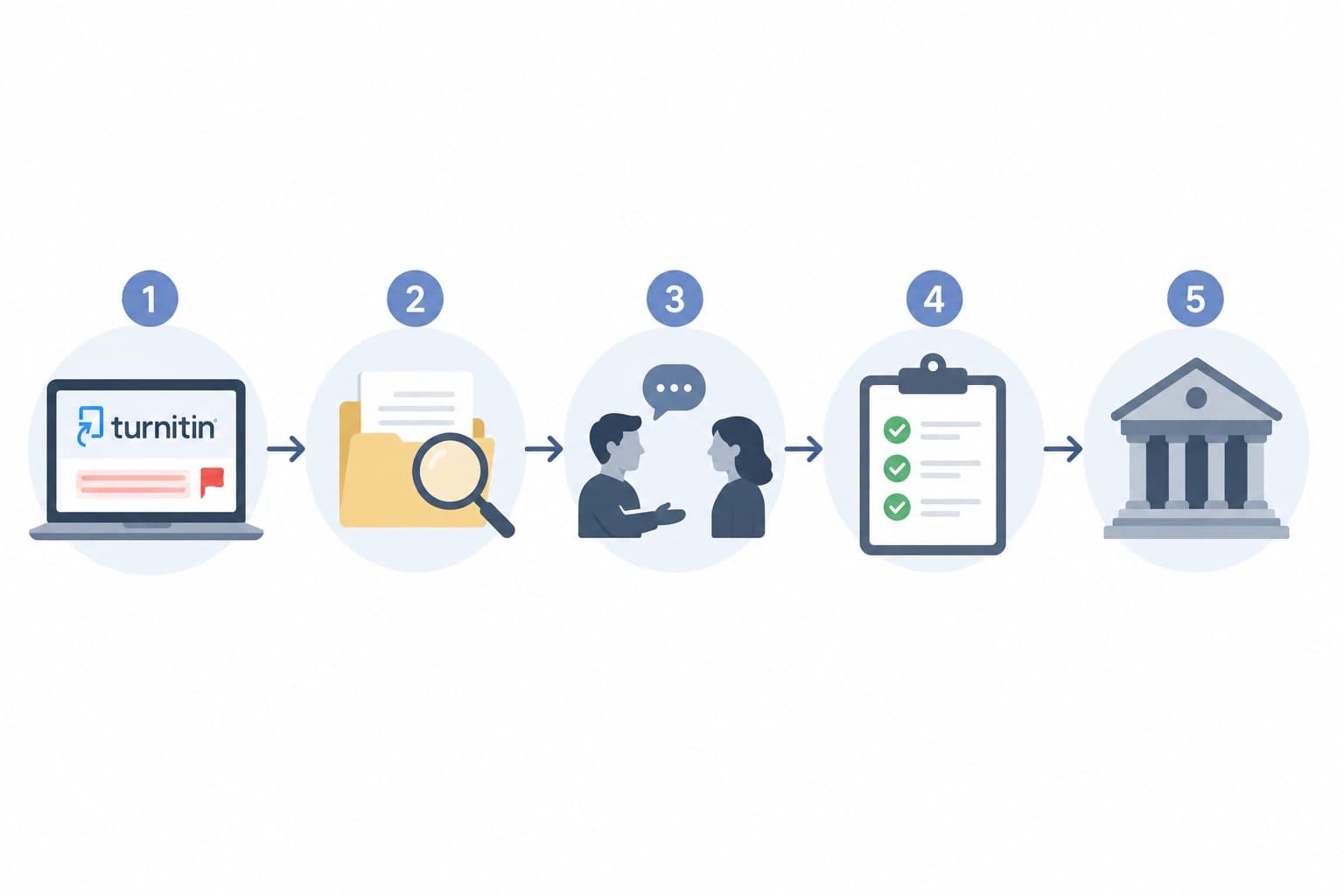
A high Turnitin score does not trigger an investigation. A human decision does. Before a single formal step is taken, an instructor must review the report, assess the context, and decide that the concern is serious enough to escalate. Understanding how that process works — and what investigators actually look at once it begins — is the most useful thing a student can know when they are facing a potential misconduct allegation. For an overview of what happens when Turnitin flags you, start there. This guide covers the investigation itself in depth.
Turnitin is the starting point, not the verdict
Turnitin is a database-matching tool and, in the case of AI detection, a statistical text analyser. It does one thing: it produces scores. It does not determine whether plagiarism occurred. It does not assess intent. It does not know whether your bibliography was excluded, whether you were writing in your second language, or whether the matching text is a properly cited quotation. Those are judgements that require a person.
This matters for how you understand everything that follows. When Turnitin returns a high similarity score, what your institution has is a signal worth reviewing — not a finding. The International Center for Academic Integrity is explicit that integrity determinations must be based on evidence and context, not detector output alone. Understanding what the similarity score actually measures is the necessary first step before any investigation can be fairly conducted.
The investigation process exists precisely because Turnitin cannot make the distinction between a problem and a false alarm. Everything in the stages below is designed to make that distinction using human judgement, institutional procedures, and evidence gathered from both sides.
Stage one: the instructor's review
Before anything is escalated, the instructor reviews the full Similarity Report manually. This is not a cursory check of the percentage — it is a substantive reading of which passages are flagged and what they match against. Experienced instructors know the difference between a benign high score and a genuine concern, and they look at several specific things:
- Which passages are flagged and what sources they match. A match to a textbook or journal your assignment asked you to cite is expected. A large block of text matching a single obscure source you did not cite is a different matter entirely.
- Whether the bibliography is inflating the score. Reference lists that were not excluded can produce high scores with no integrity implications. An instructor can re-run the report with the bibliography filter applied to see the body-of-work score.
- Whether matches are concentrated or scattered. A single long block of text matching one source looks very different from scattered short matches across dozens of sources. The pattern is more informative than the number.
- Whether writing style is consistent throughout. Instructors who have read your earlier work or heard you speak in seminars can often identify when a section of a paper does not sound like you — even when the matching score is low.
- Whether a paraphrasing attempt is visible. Patchwork rewriting — where source text has been lightly altered word by word — is a known pattern that instructors are trained to recognise, and Turnitin's own report often highlights it even when the similarity score is moderate.
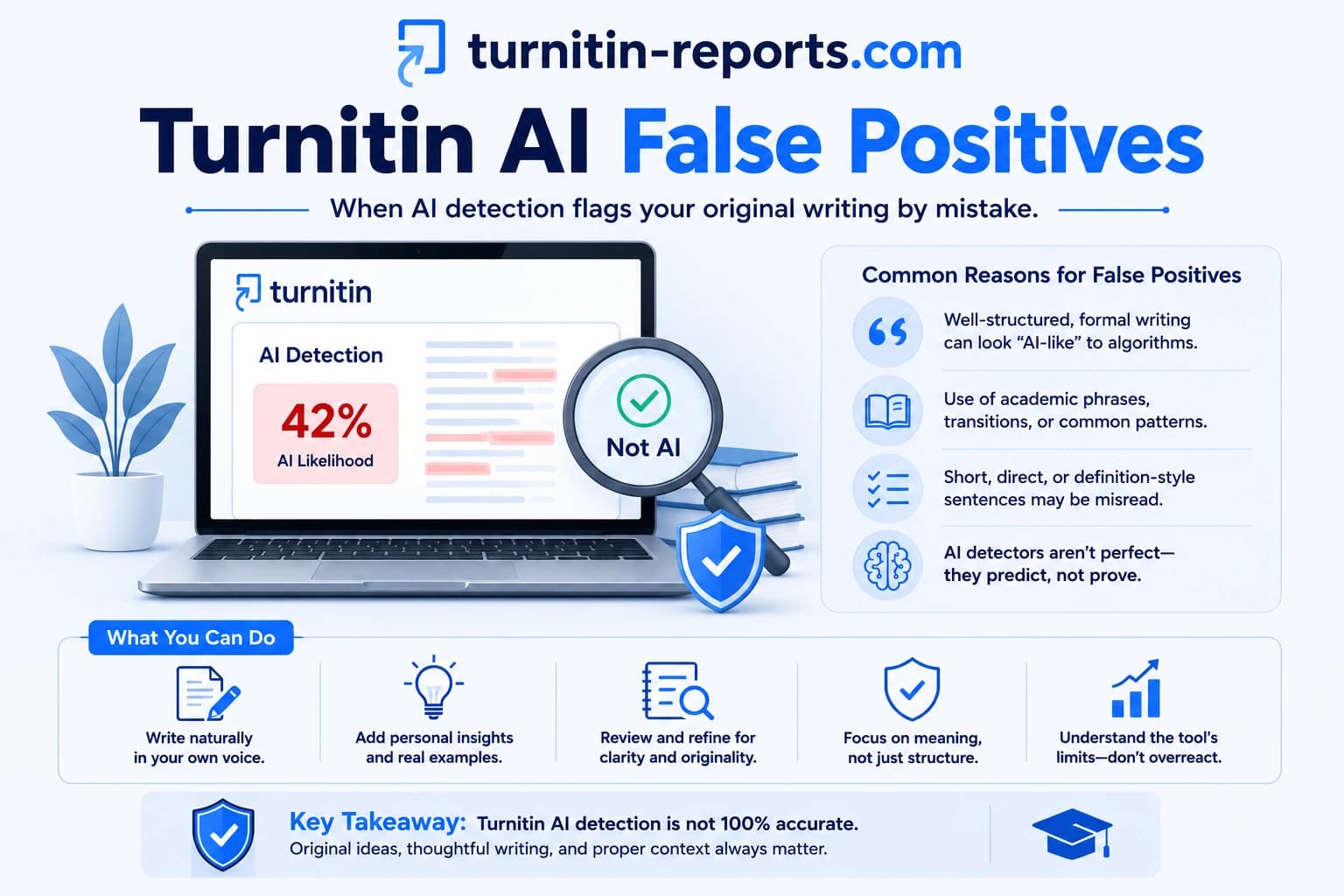
Most high scores never leave the instructor's desk. A high percentage driven by a bibliography, common field terminology, or heavily cited passages is routinely resolved with a brief conversation or no action at all. If the instructor decides there is a genuine concern after this review, they move to stage two — but they make that call, not the software. The same applies to AI detection: Turnitin AI false positives are well documented, and most instructors understand that a score alone is not sufficient grounds for escalation.
Stage two: the academic integrity office
When an instructor decides the concern warrants formal review, the case is referred to the academic integrity office — sometimes called the student conduct office or dean of students office depending on your institution. This is where the process becomes official.
Institutions like UC San Diego and Stanford publish their full investigation procedures publicly, and the structure is broadly similar across most universities:
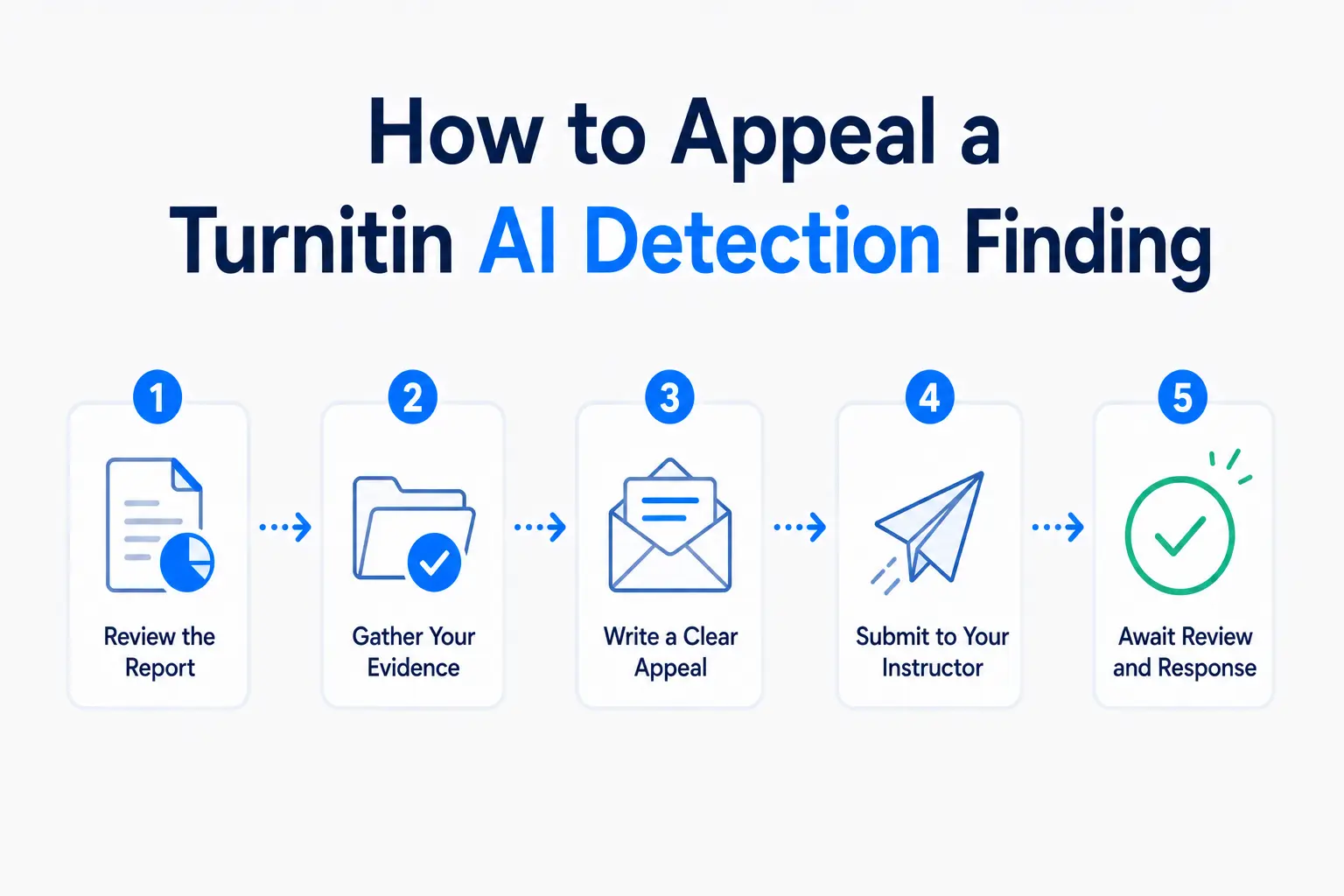
- Formal notification. You receive written notice that a concern has been referred for investigation. This notice will identify the assignment, the nature of the concern, and the next steps. Do not ignore this. The window for gathering your evidence begins the moment you receive it.
- Evidence gathering. The integrity office collects the Turnitin report, the original submission, any prior work on file, and any relevant course records. You are invited to respond in writing and to submit your own supporting materials within a defined timeframe — typically five to fifteen business days.
- Review or hearing. Depending on the institution and the complexity of the case, the review is either conducted by an integrity officer on the written record or by a panel that includes faculty and sometimes student members. You typically have the right to present your case directly at a hearing.
- Decision and written outcome. The officer or panel makes a finding — either that the concern is not substantiated, or that a violation occurred — and notifies you in writing of both the finding and any sanction applied.
- Appeal. If you disagree with the finding or sanction, most institutions allow a formal appeal, typically within ten to thirty days. For a full walkthrough of how to appeal a Turnitin finding, that guide covers the grounds and process in detail.
What investigators actually look at beyond the score
By the time a case reaches the academic integrity office, the Turnitin score is background information — not the primary focus of the investigation. What investigators actually examine is a broader picture of evidence, and this is where students who did write their own work have significant advantages they often do not realise.
- Version history from Google Docs or Word. This is considered the gold standard of process evidence. A document that shows incremental writing across multiple sessions, with revisions visible at each stage, is strong evidence of genuine authorship. A document with no version history or a single large paste event raises the opposite inference.
- Research notes and annotated sources. Handwritten notes, annotated PDFs, and a browsing history that shows engagement with the sources cited in your paper all support the account that you did the research yourself.
- Early drafts and outlines. Any earlier version of the work — even a rough outline with placeholder text — demonstrates a writing process that a purchased essay would not have.
- Writing style comparison against prior submissions. Investigators often compare the flagged work against essays you submitted in previous semesters or in other modules. A sudden dramatic jump in writing quality or a change in register and vocabulary is a known marker of potential contract cheating. For a fuller understanding of how Turnitin handles contract cheating, that post explains what the tool can and cannot detect.
- Subject-matter knowledge in conversation. Investigators may ask you to explain the argument in the flagged paper in your own words, or to walk through the methodology you used. A student who wrote the work themselves can nearly always do this. A student who submitted purchased work typically cannot.
Digital forensics: version history, metadata, and IP logs
In cases involving suspected contract cheating or serious plagiarism, investigators can draw on technical evidence that goes well beyond the Turnitin report itself.
Document metadata embedded in Word or PDF files records the file creation date, the last modified date, and — in some versions — the author name registered on the software. A document whose metadata shows it was created the night before submission, despite claiming to represent weeks of work, is a red flag investigators know to look for.
Submission IP logs are retained by your institution's learning management system. These logs record where — geographically — the file was uploaded from. In cases where investigators suspect a third party submitted work on a student's behalf, IP address evidence can be significant. This is especially relevant in cases where the submission originated from a location inconsistent with the student's known location at the time.
Version history from cloud platforms is the most powerful tool available to students in their defence. Google Docs records every edit with a timestamp and the account that made it. Microsoft Word's version history in OneDrive or SharePoint works similarly. Students who routinely write in Google Docs and can produce their full version history have a compelling piece of exculpatory evidence that is genuinely difficult to fabricate.
Stylometry — computational analysis of writing patterns across a body of work — is used by some institutions and forensic linguistics consultants in high-stakes cases. It compares sentence construction habits, vocabulary choices, and punctuation patterns to assess whether a submission is statistically consistent with a student's known writing. Turnitin's own Authorship Investigate tool applies a version of this analysis and has been reported to detect contract cheating at rates around 59% — useful as a signal, but not definitive on its own.
Understanding how self-plagiarism is handled is also relevant here — reuse of your own prior work without disclosure is a category investigators look for separately from third-party plagiarism, and the technical evidence involved is similar.
How investigators assess intent
Intent is the central question in every plagiarism investigation. The difference between accidental citation failure and deliberate academic fraud determines both whether a violation occurred and, if it did, how serious the outcome will be. Investigators are trained to look for specific markers on both sides of that line.
Markers that suggest an accidental or naive violation:
- Inconsistent citation — some sources properly attributed, others not — indicating an attempt at referencing that was not completed correctly.
- A bibliography that includes the sources that match, suggesting awareness of the material rather than an attempt to conceal its origin.
- Visible paraphrasing attempts in matched passages — the student clearly tried to rewrite rather than copy verbatim.
- A writing style broadly consistent with earlier submitted work, even if the flagged section is weaker.
- Version history that shows incremental writing, even if the matched passages appeared early and unchanged.
Markers that suggest a deliberate violation:
- No version history for a substantial piece of work — or a version history that shows the entire document appearing in a single paste event.
- A dramatic quality jump compared to the student's prior written work across modules or earlier in the same module.
- Matching entire paragraphs or sections verbatim with no citation attempt at all.
- The student is unable to explain their own argument or methodology when asked directly.
- Document metadata inconsistent with the claimed writing timeline.
Investigators weigh these markers collectively. A single marker is rarely determinative. A cluster of deliberate markers is treated very differently from isolated accidental ones.
Your rights during the investigation
Academic integrity investigations are governed by your institution's policies, and those policies exist to protect both the integrity of the process and the rights of the student. Knowing what you are entitled to is not adversarial — it is essential to presenting your case effectively.
- The right to see the full report. You are entitled to review the complete Turnitin Similarity Report, the specific passages flagged, and the sources they matched against. You cannot prepare an effective response to an allegation you cannot see in full.
- The right to submit evidence. You have the right to provide supporting materials — drafts, version history, research notes, and any other documentation relevant to your writing process. You should gather this evidence immediately upon receiving notification of the investigation.
- The right to a written response. Before any finding is made, you are entitled to submit a written statement responding to the allegation. Use this opportunity carefully — be factual, specific, and focused on the evidence you can provide.
- The right to a hearing or panel. Most institutions allow you to present your case in person before a decision is made. Some offer this as a choice between a written review and a live hearing. If you have strong process evidence and can speak fluently about your own work, a hearing is usually to your advantage.
- The right to appeal. If you disagree with the finding or consider the sanction disproportionate, a formal appeal process is available. Grounds for appeal typically include procedural error in how the investigation was conducted, new evidence that was not previously available, or a penalty clearly inconsistent with the institution's own guidelines.
How long the investigation takes
The timeline varies substantially depending on how complex the case is and at what stage it is resolved. Most investigations follow a predictable structure:
- Instructor-level resolution: If the concern is addressed directly between you and your instructor without formal referral, it can be resolved in days to two weeks. This is the fastest path and the one most likely for straightforward cases involving citation errors or minor unintentional overlap.
- Academic integrity office review: Once formally referred, the standard investigation — notification, evidence gathering, written review — typically takes three to six weeks. Both sides need time to gather and submit materials, and the officer or committee needs time to assess them.
- Full hearing and appeal: If you request a panel hearing or exercise your appeal rights, the full process can extend to two to three months. Scheduling a panel hearing involves coordinating multiple people's availability. Appeals require a fresh review by a different officer or panel, which adds further time.
During the investigation, most institutions allow you to continue attending classes and submitting work. The grade for the assignment in question — and in some cases the final course grade — is typically held until the investigation is resolved.
What happens at the end — cleared vs. found guilty
The investigation ends with a written finding. There are two outcomes.
Case dismissed. If the evidence does not support the allegation, the case is closed. At most institutions this means no formal record on your official file — the allegation does not appear on your transcript and is not reported to future employers or graduate programmes. Some institutions maintain an internal administrative note for a defined period, but this is not public and does not affect your standing. You should receive written confirmation that the case is closed.
Finding confirmed. If a violation is found, the institution applies a sanction scaled to the severity of the offence and your prior record. Most institutions operate graduated scales:
- Minor first offence: A zero on the assignment, mandatory academic integrity training, or a formal written warning. No transcript notation at many institutions for a first minor infraction.
- Moderate violation: A failing grade for the course, a formal transcript notation, or both. The distinction between unintentional and intentional violation matters at this level — most policies treat careless citation failure differently from deliberate copying.
- Serious or repeat violation: Suspension, a permanent transcript notation, or expulsion. In professional programmes — medicine, law, education, social work — a serious misconduct finding can also affect licensing and registration with professional bodies.
If you believe the finding is wrong or the sanction is disproportionate, the appeal process is your next step. Grounds for appeal, the evidence that matters most, and the timeline are all covered in detail in our guide to how to appeal a Turnitin finding.
Frequently asked questions
Can an instructor accuse me of plagiarism based on Turnitin alone?
No. Turnitin produces a similarity score and an AI writing indicator — both are data points, not findings. An accusation of plagiarism requires a human judgement based on the full report, the context of the writing, and any supporting evidence. No institution's academic integrity policy permits a formal finding on a score alone, and increasingly courts agree: acting on a detector score without due process is legally vulnerable.
What is the most useful evidence I can provide during an investigation?
Google Docs or Word version history is the single most persuasive piece of evidence available to students. It timestamps every edit, shows the progression of your argument, and is extremely difficult to fabricate. Research notes, annotated sources, and early drafts all reinforce the same picture. If you can walk an investigator through your argument in your own words, that substantive knowledge is itself evidence.
Can I bring a lawyer or advocate to the hearing?
It depends on your institution. Many universities allow a student advocate, ombudsman, or support person — but not an active legal representative who can speak on your behalf. Some institutions allow a silent support person only. Check your institution's academic integrity policy for the specific rules before your hearing. Contacting your student union is a good first step, as most have trained academic integrity advisors.
What happens if the investigation finds I didn't plagiarise?
The case is dismissed and, in most institutions, no record of the allegation is retained on your official file. Some universities maintain an internal administrative note for a defined period, but this has no effect on your transcript, references, or standing. You should receive written confirmation of the dismissal. If you believe the allegation caused demonstrable harm — reputational, academic, or professional — some institutions allow a formal complaint about the process.
How long does the full investigation process take?
A straightforward case resolved at the instructor level can take days to two weeks. Once referred to the academic integrity office, the formal process typically runs three to six weeks — time for notification, evidence gathering from both sides, and a scheduled review. If you request a full hearing panel or exercise appeal rights, the timeline extends to two to three months. During this period most institutions allow you to continue your studies, though grade release for the affected work may be withheld pending the outcome.
Ready to check your paper?
Get your Turnitin report in minutes.
Same report your institution generates — delivered privately, fast.
Related articles
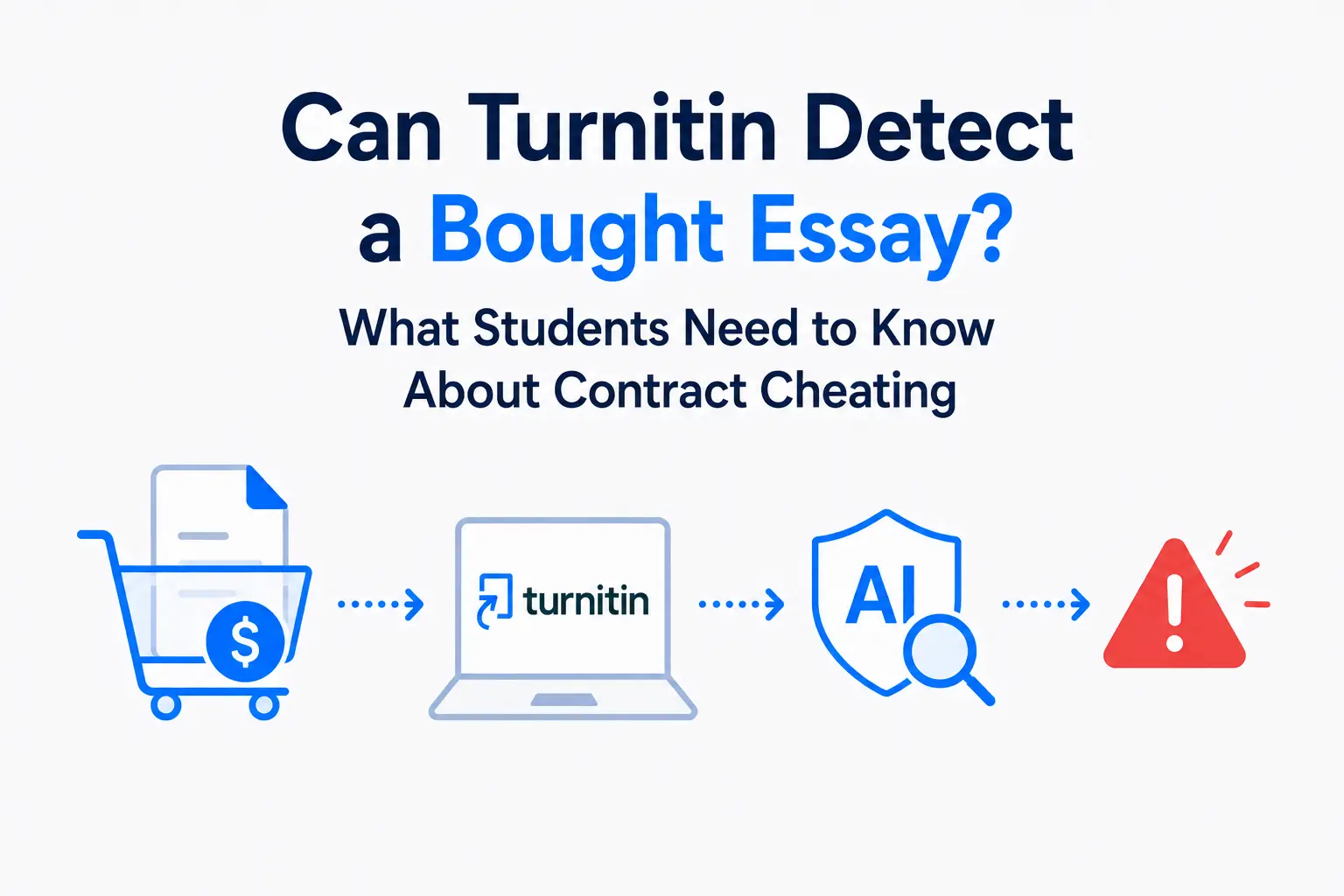
Can Turnitin Detect a Bought Essay? What Students Need to Know About Contract Cheating
8 min read · July 11, 2026