Does Turnitin AI Detection Work in Other Languages? What International Students Need to Know
Turnitin AI detection supports only 3 languages — English, Spanish, and Japanese. For everyone else, detection is skipped entirely. And even for non-native English writers, false positive rates exceed 61%. Here's what international students need to know.
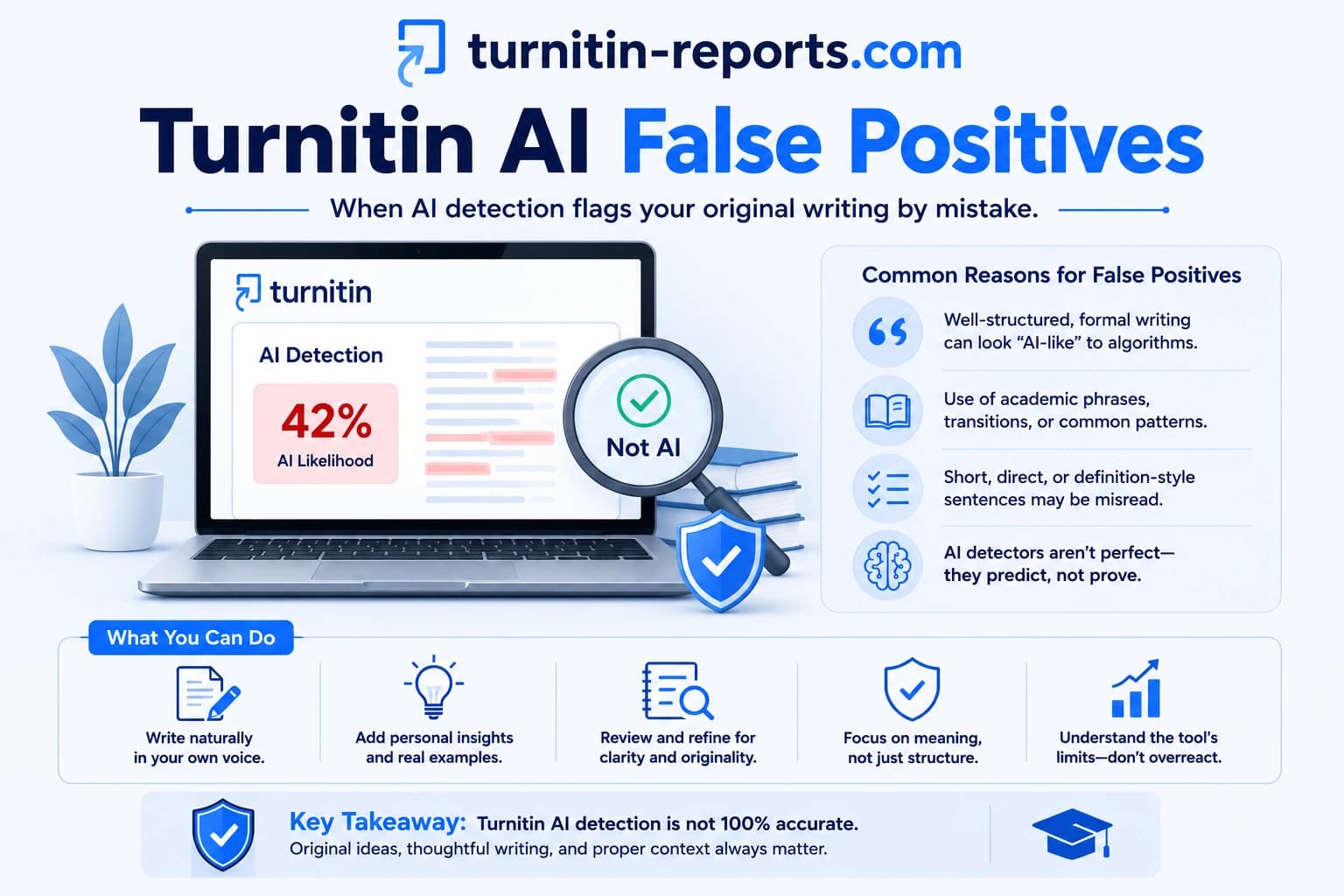
If you are an international student or a non-native English speaker, Turnitin's AI detection system carries a risk that most students are never told about: your writing style alone — independent of any AI use — makes you statistically more likely to be flagged. This is not a fringe concern. A Stanford University study found that over 61% of essays written by non-native English speakers were incorrectly identified as AI-generated. Understanding why this happens, which languages Turnitin actually supports, and what your options are if you get flagged is essential knowledge before you submit.
Which languages does Turnitin AI detection support?
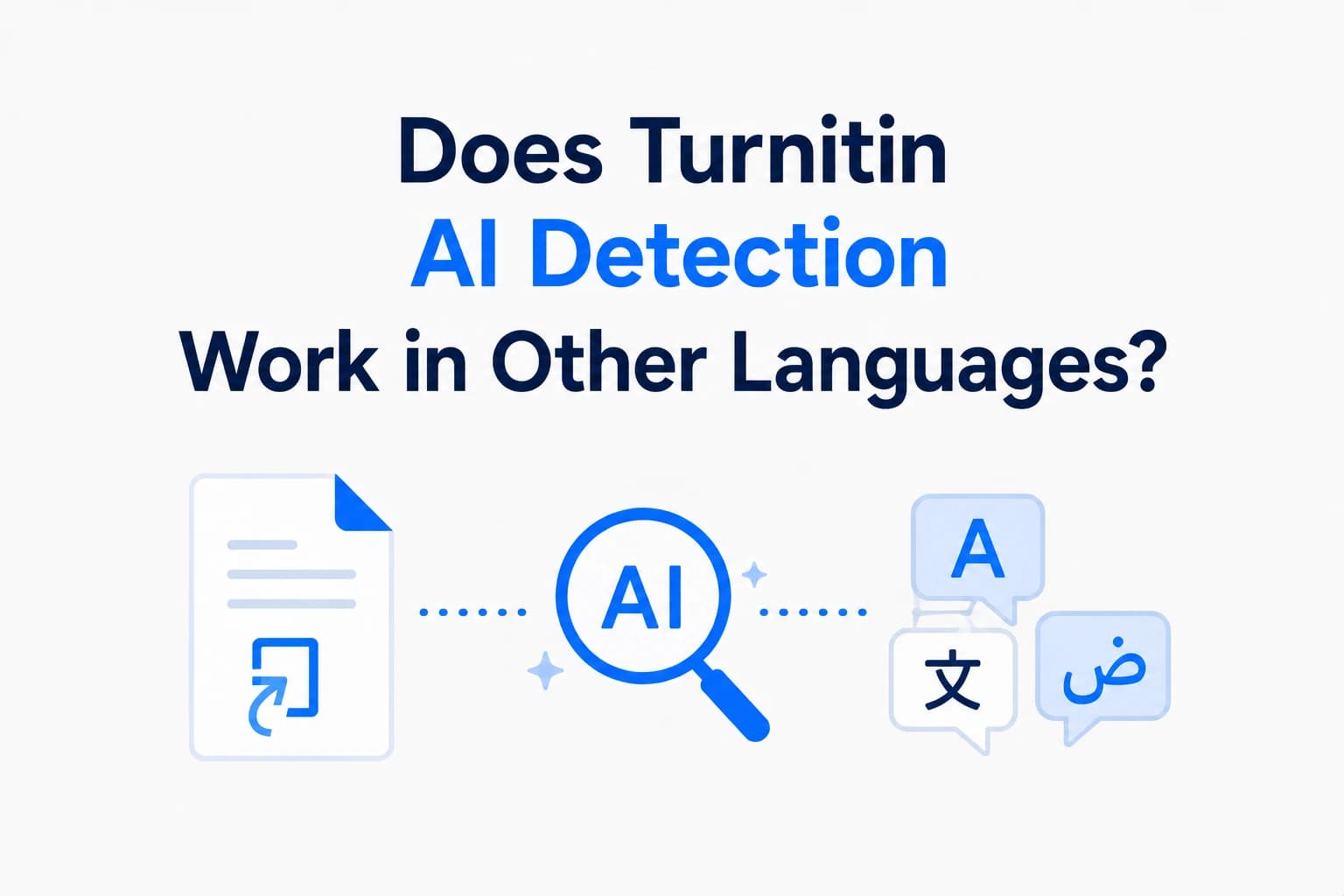
Turnitin's AI writing detection currently supports three languages: English, Spanish, and Japanese. Spanish support was added in September 2024; Japanese followed in April 2025. Every other language — including Arabic, Mandarin Chinese, French, German, Korean, Hindi, and Russian — is outside the scope of Turnitin's AI detection entirely. A full breakdown of Turnitin's language support confirms that AI detection and similarity detection cover very different sets of languages — the similarity checker supports over 30 languages, but AI detection is limited to just these three.
There is a critical distinction within those three. The English-language detector is the only one that includes Turnitin's full detection capabilities — including the AI paraphrasing detection layer, which identifies text that was AI-generated and then processed through a humaniser or rewriting tool. The Spanish and Japanese detectors do not include this layer. They can detect straightforward AI-generated writing, but they cannot flag AI text that has been paraphrased or run through a bypasser tool. Turnitin's own documentation confirms this gap explicitly.
For students writing in unsupported languages, Turnitin does not attempt to generate an AI score at all — the submission is simply not processed for AI detection. According to Turnitin's own FAQ, “if a paper in a non-supported language is submitted, the detector will not process the submission.” This means students writing in Arabic, Mandarin, French, German, Korean, and dozens of other languages receive no AI detection result — which may seem reassuring, but also means they get no advance warning if something in their submission might be flagged if checked through a different system.
Why non-native English writers are disproportionately flagged
The bias against non-native English writers is not random — it is structural, and it is rooted in how AI detection works.
AI detectors measure a property called perplexity: how predictable each word choice is. AI-generated text tends to be highly predictable because language models select the most statistically probable word at each step. Human writing — particularly by native speakers — is less predictable: writers make unusual word choices, vary sentence length, and shift register in ways that AI does not.
Non-native English writers, however, naturally write in simpler, more consistent sentence structures. They do this to avoid grammatical errors — choosing familiar vocabulary, keeping sentences shorter, avoiding complex clause constructions. This produces writing that is statistically less varied than native English prose. And that low-variation pattern is exactly what AI detectors are trained to flag.
The Stanford HAI research team tested seven AI detectors against TOEFL essays — standardised writing samples produced by non-native English speakers under exam conditions, with no possibility of AI assistance. Over 61% were incorrectly flagged as AI-generated. Across all seven tools tested, 97% of those essays were flagged by at least one detector. The researchers concluded that AI detectors should not be used in educational settings with non-native English speakers.
A subsequent 2025 study testing Turnitin specifically found that the platform produces false positives for non-native English speakers at roughly five times the rate of native English speakers. These are not edge cases — they represent a systemic bias baked into how the detection model was trained.
What happens if you write in a language Turnitin does not support?
If your assignment is in an unsupported language, the AI detection score your instructor sees may have no meaningful basis. Turnitin does not have a trained model for your language, but depending on how the assignment is configured, a score may still appear in the report. That score should not be treated as evidence of AI use — but not every instructor knows this, and not every institution has clear guidance on what to do with AI detection results for non-English submissions.
If you are submitting work in an unsupported language and your institution uses Turnitin, it is worth asking your instructor or academic integrity office directly whether AI detection will be applied to your submission and what weight it carries. Getting that answer in writing before you submit gives you a record to refer to if a problem arises.
What to do if you are a non-native speaker flagged for AI
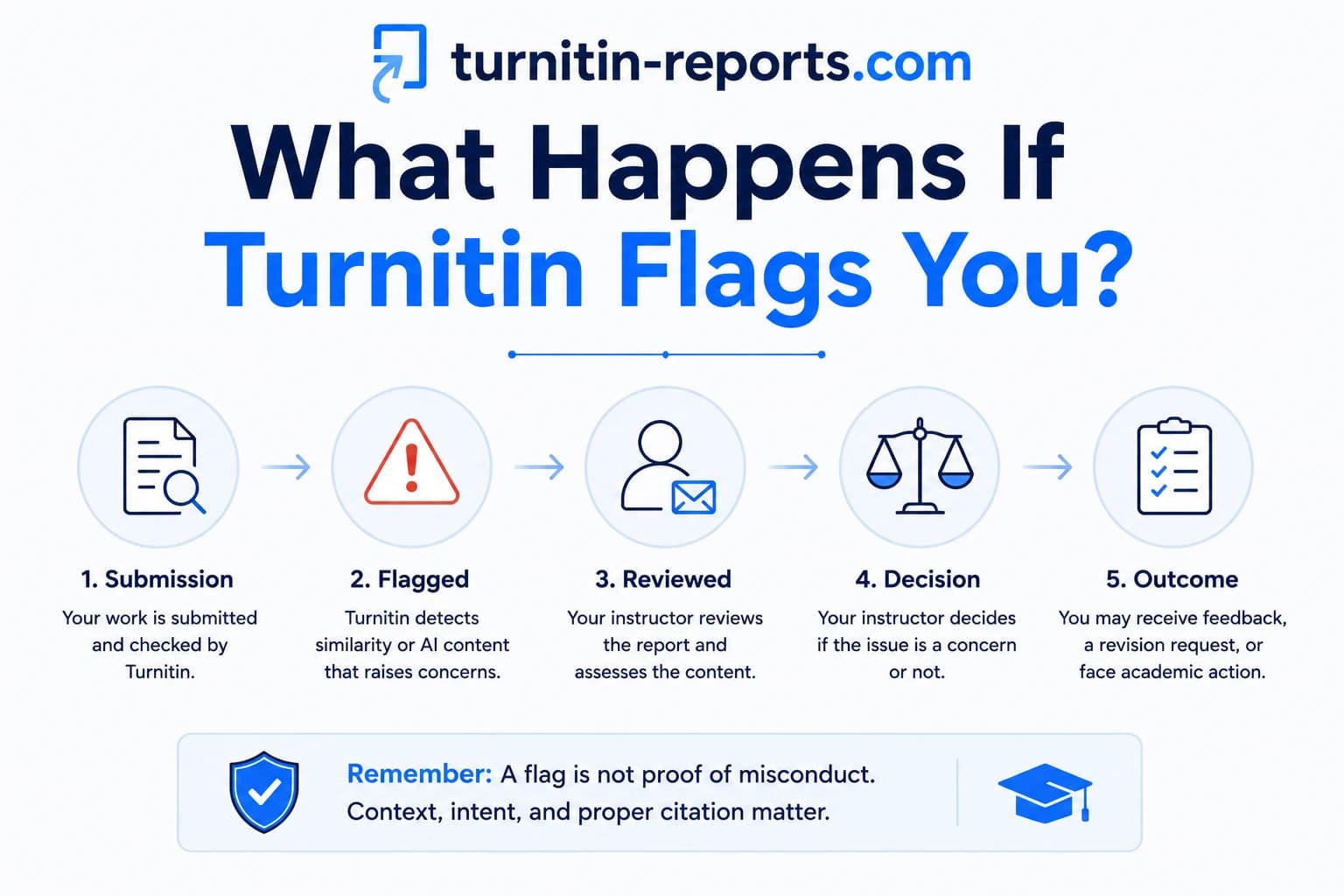
Being flagged is not the same as being found guilty. Turnitin's own guidance states that the AI score should not serve as the sole basis for a misconduct finding — it is intended to prompt a conversation, not to substitute for one. If you are flagged and your work is genuinely your own, your response should focus on documenting your writing process clearly and presenting it early.
- Collect your drafts immediately. Version history from Google Docs, OneDrive, or Word shows how your document evolved over time — timestamps, edits, deletions. This is the most powerful evidence you can present because it demonstrates a human writing process that AI use cannot replicate.
- Preserve your research notes. Browser history, downloaded PDFs, annotated readings, and any handwritten notes document the research process behind the paper.
- Reference the Stanford research directly. The Stanford HAI study on non-native speaker false positive rates is peer-reviewed, publicly available, and directly relevant. Mentioning it in any appeal gives your case academic grounding.
- Raise your language background explicitly. If English is not your first language, say so clearly and explain that the writing style that triggered the flag is consistent with the documented false positive pattern for non-native writers.
- Request the full Turnitin report. Ask which passages were flagged and what percentage was attributed to AI. A low score close to the 20% threshold is very different from an 80% score — and knowing the specifics lets you respond precisely.
How universities are responding to this problem
A growing number of institutions have reduced or removed their reliance on AI detection tools after the false positive evidence became too significant to ignore. Vanderbilt University disabled Turnitin's AI detector in 2023, citing concerns about bias against ESL students. Curtin University in Australia followed in January 2026, explicitly stating that the tool produced unacceptable rates of false positives against English Language Learner students.
These decisions reflect a broader shift in how institutions are thinking about AI detection: the score is being treated not as evidence, but as one signal among several — alongside instructor judgment, writing history, and the student's ability to discuss their own work. If your institution has not made this shift yet, knowing that others have is useful context in any appeal conversation.
Checking your AI score before submission
If you are a non-native English speaker, checking your AI score before your institution does gives you critical advance notice. A score that comes back above 20% is not a verdict — but seeing it before submission means you have time to understand which passages triggered it, gather your process documentation, and decide whether to rewrite or simply prepare your defence.
You can run your paper through and receive the same AI Writing Report your instructor will see, processed under settings that do not add your paper to Turnitin's student repository. Our guide on Turnitin AI false positives covers the full picture of which writing styles are most at risk and what to do when the score does not reflect your actual work.
Frequently asked questions
Does Turnitin AI detection work in languages other than English?
Turnitin AI detection supports three languages: English, Spanish (added September 2024), and Japanese (added April 2025). For all other languages — including Arabic, Mandarin, French, German, Korean, Hindi, and Russian — Turnitin does not process the submission for AI detection at all. Spanish and Japanese detection also lacks the paraphrasing and AI bypasser detection capabilities that the English detector includes.
Why are non-native English speakers more likely to get false positives?
AI detectors measure how predictable word choices are — a property called perplexity. Non-native English writers naturally use simpler vocabulary and more consistent sentence structures to avoid errors. This produces writing with the same low-perplexity statistical signature that AI detectors are trained to flag, even when the work is entirely human-written. The Stanford HAI study found over 61% of non-native English writing was falsely flagged across multiple AI detection tools.
Can I appeal a Turnitin AI flag if English is not my first language?
Yes. Turnitin's own guidance states the AI score should not be the sole basis for a misconduct finding. Collect all evidence of your writing process — draft history, research notes, version timestamps — and raise your language background explicitly in any appeal. The Stanford research on non-native speaker false positive rates is publicly available and directly applicable to your situation.
Do universities treat AI detection results differently for international students?
Policies vary significantly. Some institutions have disabled AI detection entirely for ESL students or removed it altogether. Others apply the same score thresholds regardless of language background. Before submitting, it is worth checking your institution's academic integrity policy specifically for guidance on AI detection and non-native speakers — and asking in writing if nothing is documented.
Ready to check your paper?
Get your Turnitin report in minutes.
Same report your institution generates — delivered privately, fast.