More Than 50 Universities Have Disabled Turnitin AI Detection — Here's Why
Johns Hopkins, Vanderbilt, Waterloo, Curtin, and over 50 more institutions have pulled back from Turnitin's AI detection tool. Here's what they found, what they're doing instead, and what it means if your university still uses it.
Over 50 universities across the US, UK, Canada, Australia, and South Africa have now formally disabled, restricted, or moved away from Turnitin's AI detection tool. The list keeps growing. These are not small institutions making a quiet policy change — they include Johns Hopkins, Vanderbilt, Yale, the University of Waterloo, Curtin University, and Australian Catholic University. What are they finding that is making them pull back, and what does it mean for students whose institutions still use the tool?
The growing list of institutions
According to a tracker of universities that have banned AI detectors, more than 50 institutions had formally disabled or restricted AI detection tools as of mid-2026. Here are the most notable and their stated reasons:
- Vanderbilt University (USA, 2023 — ongoing). Vanderbilt was one of the earliest major institutions to act. Its published guidance cites lack of transparency about how AI-generated content is determined, along with concerns about accuracy and false accusations. Vanderbilt's Technology Advisory Committee found “significant accuracy limitations that create unacceptable risk of false accusations.” The pause was described as temporary pending detection technology improvements, but no reinstatement timeline has been announced.
- Johns Hopkins University (USA, early 2025). Johns Hopkins moved to an “advisory only” policy — professors can run submissions through Turnitin if they choose, but results can only be used to open a conversation, not file a formal charge. The change came after several contested cases where students demonstrated their original human-written work had been incorrectly flagged.
- Australian Catholic University (Australia, March 2025). ACU's situation was particularly striking. It recorded nearly 6,000 alleged academic misconduct cases in 2024, approximately 90% AI-related. A substantial share were dismissed after investigation — the volume of contested and dropped cases made the tool's use unsustainable, and ACU discontinued it entirely.
- University of Waterloo (Canada, September 2025). Waterloo's decision was driven by direct internal testing. The university's official statement reports that in more than one internal test, Turnitin flagged entirely human-written text as 100% AI-generated. Their Instructional Technologies team concluded the tool's advantages were “inconclusive,” and its bias against non-native English speakers was a documented equity concern.
- University of Cape Town (South Africa, October 2025). UCT adopted an AI in Education Framework that shifts focus from policing AI use to assessing the learning process itself. Turnitin's AI detection was discontinued as part of this broader reorientation.
- Curtin University (Australia, January 2026). Curtin formally disabled Turnitin AI detection from January 1, 2026, citing reliability concerns and a shift toward trust-based assessment practices. Our earlier post on why universities are disabling Turnitin AI detection covers Curtin's decision in detail alongside Vanderbilt's.
What they all found in common
Despite being on different continents with different institutional cultures, every university that has disabled AI detection has cited variants of the same three problems:
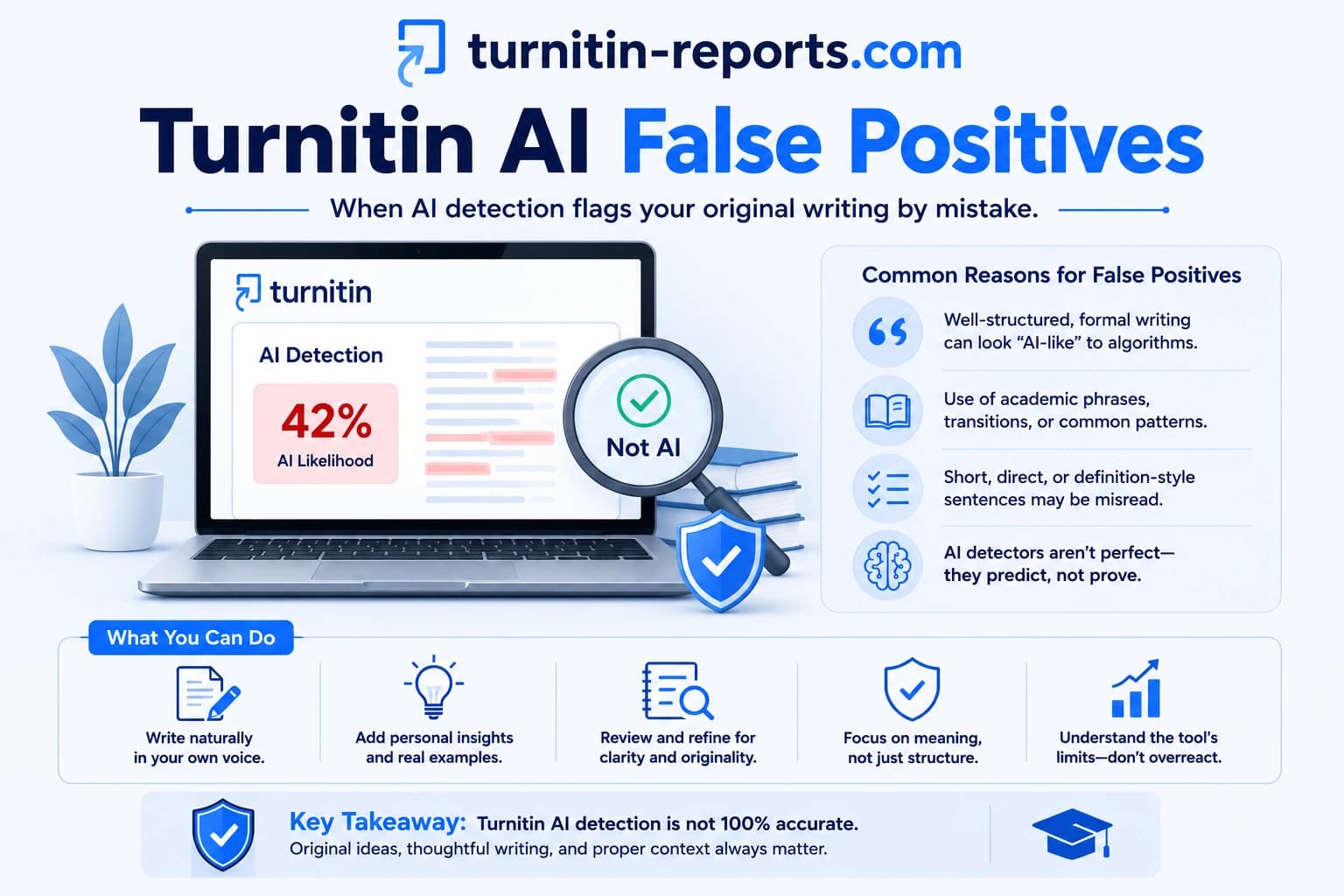
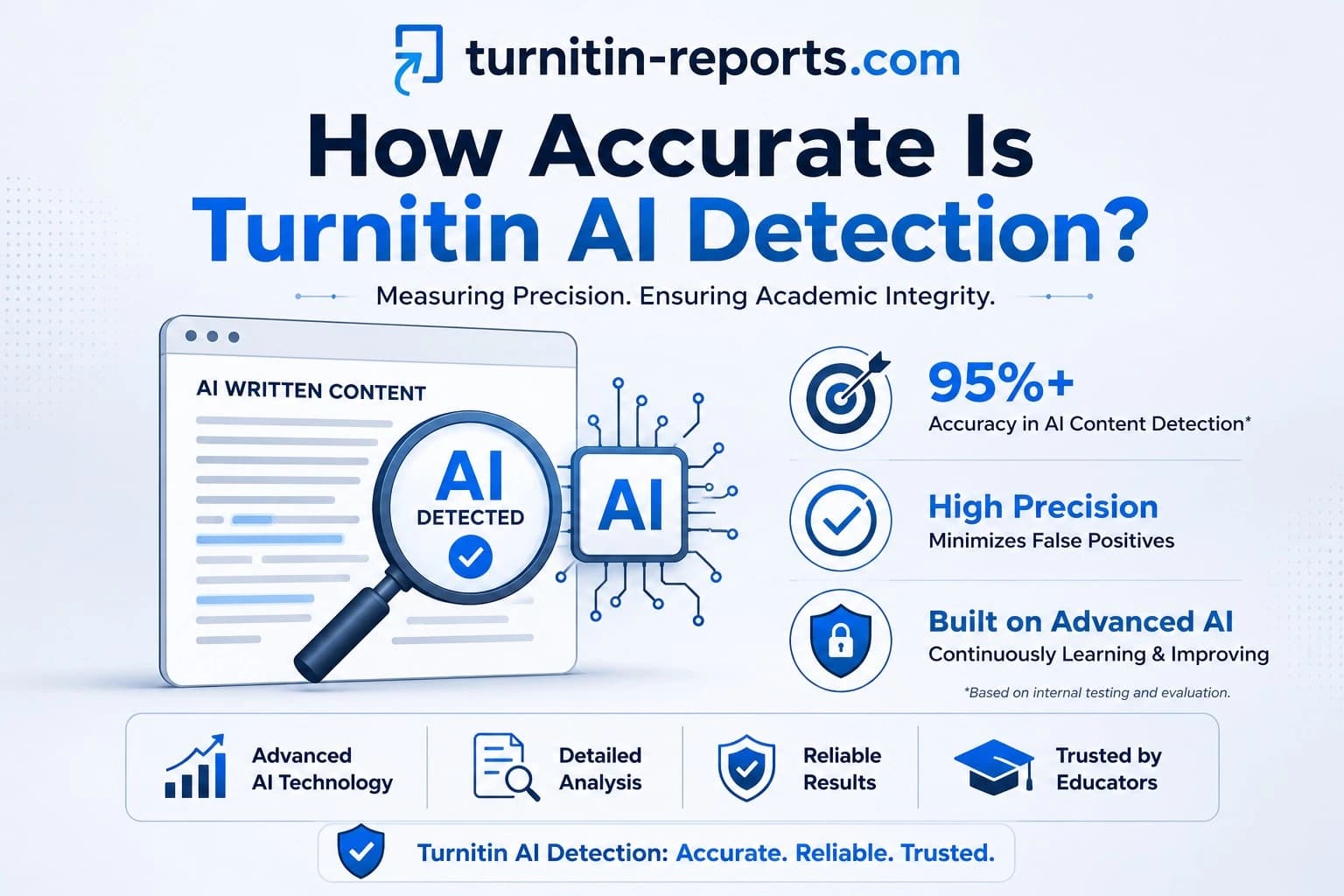
1. The false positive rate is too high to be used as evidence. Turnitin claims a false positive rate below 1%, but this figure applies to documents where more than 20% of content is AI-generated. Independent and internal institutional testing consistently produces higher real-world rates — particularly for non-native English speakers, where the Stanford HAI study found false positive rates averaging 61.3% across seven major AI detectors. For a tool being used to make decisions with serious academic consequences, these rates are indefensible as sole evidence.
2. The tool was rolled out without adequate consultation. Vanderbilt's statement specifically notes that Turnitin enabled the AI Writing Report for customers with less than 24 hours' notice, with no detailed explanation of how the detection works. Many institutions activated the feature without proper faculty training or student guidance — leading to scores being misused from day one.
3. The disproportionate impact on international students is an equity issue. Multiple institutions flagged this independently. Non-native English speakers tend to write with simpler vocabulary and more uniform sentence structures — patterns that AI detectors misread as machine-like. Waterloo cited this bias explicitly. The Yale and University of Minnesota lawsuits both involve non-native English speakers. Using a tool known to produce dramatically higher false positive rates for one demographic group in high-stakes academic decisions is an equity problem that institutions are increasingly unwilling to ignore.
What institutions are doing instead
Disabling AI detection does not mean ignoring AI misuse. The institutions that have stepped back from detection tools are largely moving toward:
- Process-based assessment. Requiring students to submit drafts, outlines, annotated bibliographies, and reflection notes alongside final submissions — making it much harder to submit AI-generated work without detection through the writing process itself.
- Oral examination components. Adding brief verbal check-ins or viva voce elements where students discuss their submitted work. A student who cannot speak to what they wrote is far easier to identify than one whose text simply has statistical properties the detector flags.
- Conversation first, accusation second. Johns Hopkins' advisory-only policy exemplifies this: a high AI score opens a dialogue, not a disciplinary referral.
- AI use policies rather than AI detection. Clearer policies on what AI assistance is and is not permitted — and assessments designed with AI's existence in mind — reduce the need for retrospective detection entirely.
What this means if your university still uses Turnitin AI detection
Most universities still use Turnitin's AI Writing Report — the majority have not disabled it. But the growing body of institutional decisions, court rulings, and published research creates a stronger framework for students who are wrongly flagged. You can now point to:
- Turnitin's own guidance that the score should not be sole evidence
- A court ruling (Newby v. Adelphi) establishing that acting on an AI score without due process is “without valid basis”
- Multiple major universities that conducted internal testing and found the tool unreliable
- Peer-reviewed research documenting false positive rates that make sole reliance on the score indefensible
If you have been flagged and your institution is treating the score as definitive, our post on what to do when Turnitin flags work you wrote yourself covers exactly how to build your appeal.
Frequently asked questions
How many universities have disabled Turnitin AI detection?
As of mid-2026, over 50 universities have formally disabled, restricted, or moved to advisory-only use of AI detection tools. The list includes major research universities in the US, Canada, Australia, the UK, and South Africa. The trend is accelerating as more institutions complete internal reviews and encounter contested misconduct cases.
Why are universities disabling Turnitin AI detection?
The three most commonly cited reasons are: high false positive rates that risk wrongly accusing innocent students, disproportionate impact on non-native English speakers, and lack of transparency about how the detection model works. Several institutions also cited the procedural burden created by contested cases — where students successfully demonstrate their flagged work was human-written, but only after lengthy and damaging investigations.
Is Turnitin removing AI detection entirely?
No. Turnitin continues to develop and update its AI Writing Report. The decisions to disable the tool are being made at the institutional level — universities are choosing not to use a feature that Turnitin continues to offer and improve. Turnitin released bypasser detection in August 2025 and improved recall in early 2026, signalling continued investment in the product.
Does my university using Turnitin AI detection mean I could be falsely accused?
There is a real risk of false positives, particularly for non-native English speakers, students with very structured writing styles, and students who use grammar tools extensively. The risk is not unique to any one institution — it is a property of the detection model itself. Knowing how to document your writing process and what your rights are in an appeal is the most practical protection. Our post on Turnitin AI false positives explains what to do if it happens to you.
Ready to check your paper?
Get your Turnitin report in minutes.
Same report your institution generates — delivered privately, fast.