Can Professors Tell If You Paraphrased with AI? Here's What the Evidence Shows
The assumption that AI paraphrasing is undetectable is one of the most reliably wrong beliefs in academic integrity right now. Professors are catching it without tools — and Turnitin built a dedicated detection layer specifically to target it.
The logic seems sound: generate text with ChatGPT, run it through QuillBot, and the result looks human enough to pass. But this assumption — that AI paraphrasing creates a safe disguise — is one of the most reliably wrong beliefs in academic integrity right now. Professors are catching it without tools. Turnitin built a specific detection layer to target it. And the statistical fingerprint that makes AI text identifiable does not disappear when you swap out the vocabulary. Here is what the evidence actually shows.
What professors notice without any tool
Before a single piece of software gets involved, experienced instructors are already reading for signals that something is off. The most reliable of these is a sudden shift in writing quality compared to earlier work in the same course. A professor who has read your discussion posts, your first assignment, and your in-class writing has a baseline sense of how you write — your vocabulary range, sentence complexity, how you structure an argument, and where you make mistakes. A submission that reads significantly differently from that baseline raises questions immediately.
Specific stylistic tells that professors consistently report noticing include:
- Overly formal or elevated vocabulary in a student known to write conversationally — words like “utilise,” “aforementioned,” and “it is worth noting that” appearing in work from someone who has never used them before.
- Uniform sentence rhythm. AI text tends to produce sentences of similar length and structure throughout a document. Human writing naturally alternates between short punchy sentences and longer complex ones — what researchers call high “burstiness.” A flat, even rhythm across thousands of words reads as artificial even to readers who have never heard the term.
- Generic arguments that miss the assignment. AI-generated content often covers the topic broadly but fails to engage with the specific readings assigned, the classroom discussions held, or the precise question asked. It is accurate in a general sense but disconnected from the actual course context.
- Fabricated or incorrect citations. Large language models hallucinate references — producing citations that look real but do not exist, or misattributing quotes to the wrong authors. A professor who checks even a few references can identify this immediately.
- Structural formulaism. A heavy reliance on transitional phrases (“furthermore,” “in addition,” “moreover”), bullet-heavy structure, and a neat introduction-body-conclusion template that feels more like a template than a genuine argument.
Beyond reading the text itself, instructors increasingly request evidence of the writing process — drafts, outlines, revision histories, research notes. A student who cannot produce earlier-stage materials for a polished submission is difficult to defend. And the oral question — “walk me through your argument” — remains the most effective check of all. A student who wrote their own work can do this. One who paraphrased AI output typically cannot explain the reasoning behind specific word choices or paragraph structure decisions.
How Turnitin specifically targets AI paraphrasing
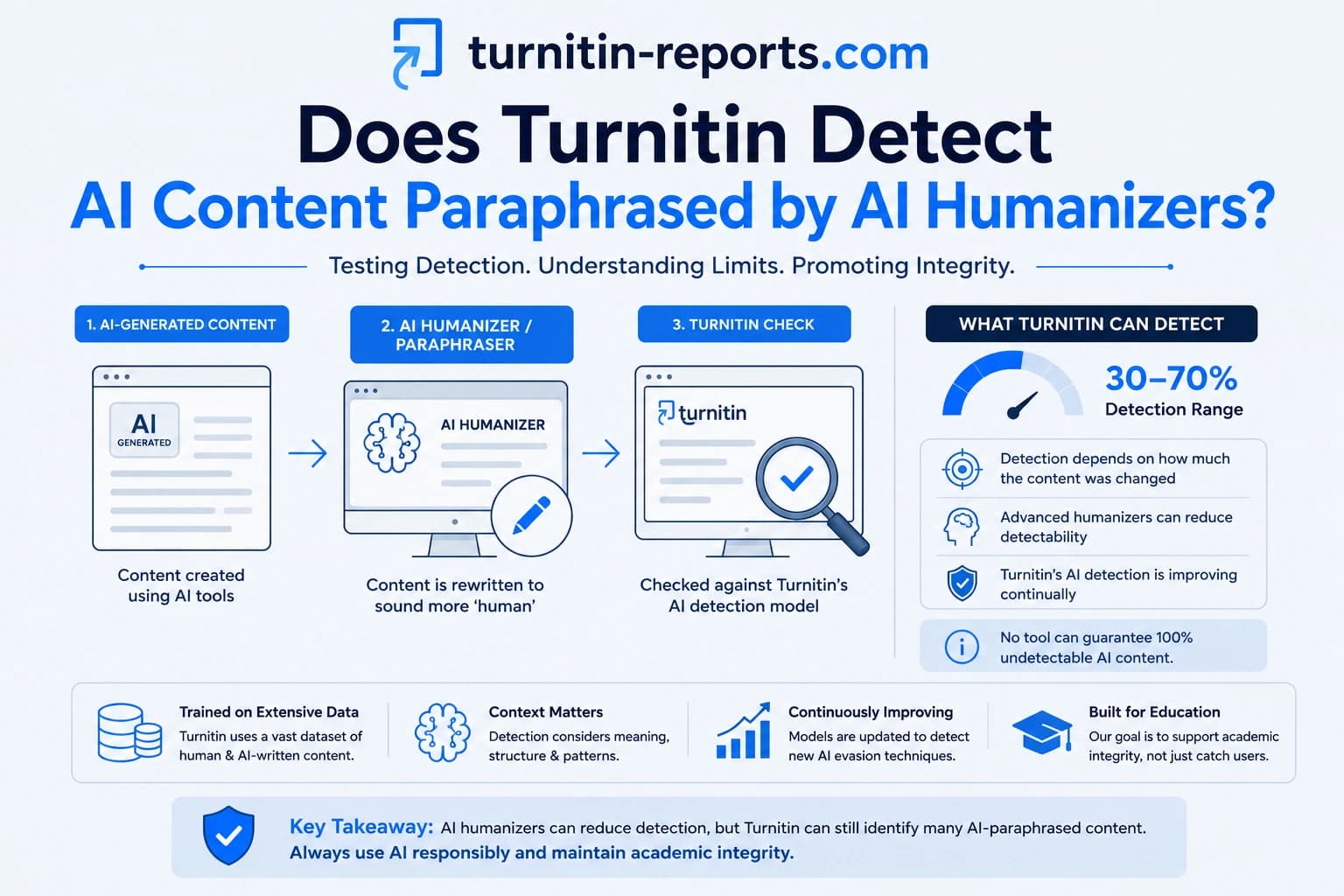
In July 2024, Turnitin launched a dedicated AI paraphrasing detection feature, announced via press release and detailed by institutions including the University of Bristol. The feature was built specifically because students were generating text with AI and then running it through paraphrasing tools — QuillBot, Grammarly's free paraphraser, Scribbr — to reduce the AI writing score. Turnitin observed this pattern in its data and built a second detection layer to target it.
The system works in two stages. First, the base AI writing detector flags passages that show statistical properties consistent with AI generation. Then, a second model runs specifically on those flagged segments and analyses whether they show signs of subsequent paraphrasing — the linguistic patterns that result from putting AI output through a text spinner. The report shows both categories in separate colours: text that appears directly AI-generated, and text that appears to have been AI-generated and then paraphrased.
As of the July 2024 launch, Turnitin had reviewed over 200 million papers since its original AI detector launched in early 2023. Roughly 22 million — about 11% — contained at least 20% AI writing. Six million papers contained more than 80% AI writing. The paraphrasing detection layer was added specifically to catch the cases that were slipping through the base detector.
Why paraphrasing doesn't actually hide AI — perplexity and burstiness explained
The reason AI paraphrasing is detectable comes down to what the paraphrasing tool actually changes and what it does not.
Perplexity is a measure of how predictable a piece of text is word by word — how surprised a language model would be by each word choice. AI text has low perplexity because it consistently selects the most statistically probable words in any context. Human text has higher perplexity because humans choose words for rhythm, specificity, personal history, humour, and precision — reasons unrelated to statistical probability. As GPTZero explains, when perplexity is consistently low across an entire document, that pattern is a strong statistical signal of machine generation.
Burstiness measures the variation in sentence length and complexity across a document. Human writers naturally shift between short, punchy sentences and long, clause-heavy ones — the rhythm of writing reflects the rhythm of thought, which is episodic and variable. AI text tends to produce sentences of uniform length and complexity throughout. Even after paraphrasing, this underlying structural rhythm often persists.
The key insight is that paraphrasing tools like QuillBot change the surface vocabulary — they swap words for synonyms and slightly alter phrasing. But the deeper statistical properties, the clause structures, the paragraph-level organisation, and the probabilistic foundations of how the LLM assembled the text, remain embedded. These are features of how large language models were trained to generate text, not just features of the specific words they chose. Changing the words does not change the architecture.
What research says about human vs. tool detection
The evidence on human detection ability is more nuanced than “professors can always tell.” Studies consistently find that naive readers — people with no specific training or experience with AI writing — perform only slightly better than chance at identifying AI text, with accuracy around 19% in some analyses. Only about 25% of teachers report feeling “very effective” at detecting AI use manually.
However, the picture changes significantly for people with expertise and context. Researchers who frequently use ChatGPT themselves achieve detection accuracy above 90% in some studies. And a professor who knows a specific student's writing from weeks of course interaction is not a naive reader — they have a personalised baseline that general studies do not account for. Utah State University's educator guidance specifically advises instructors to use in-class writing samples as a comparison baseline for this reason.
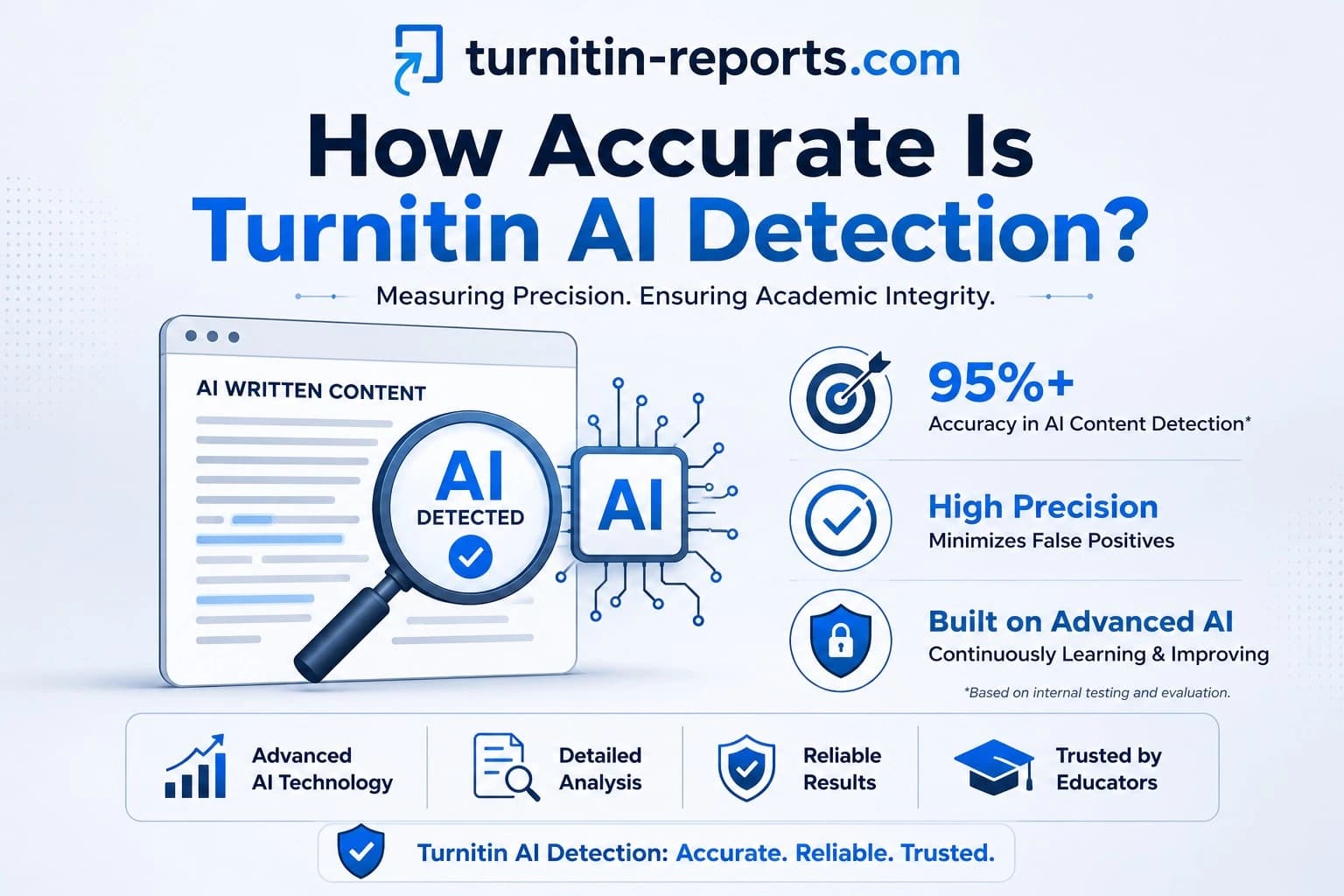
On the tool side, independent testing has consistently found accuracy lower than Turnitin's own claims, particularly for paraphrased content and non-native English speakers. Research by Stanford's James Zou and colleagues found that seven AI detectors falsely flagged 61% of essays written by non-native English speakers as AI-generated, while achieving near-perfect accuracy on native speaker essays. Non-native writers naturally tend toward simpler, more consistent sentence structures — statistically similar to AI text — making them disproportionately vulnerable to false positives. The Markup documented real student cases where international students faced misconduct proceedings based on detector scores that proved inaccurate.
What happens if you are caught — or falsely accused
The consequences of an AI misconduct finding follow the same escalating structure as other academic integrity violations — failing the assignment, failing the course, academic probation, suspension, or expulsion. But AI-related cases have introduced a new dimension of severity in some documented instances. In 2024, a doctoral student at the University of Minnesota was expelled after AI use was detected in a doctoral examination. Because his student visa status was tied to his enrolment, expulsion also triggered the termination of his legal immigration status — one of the most severe documented outcomes of an AI misconduct case to date.
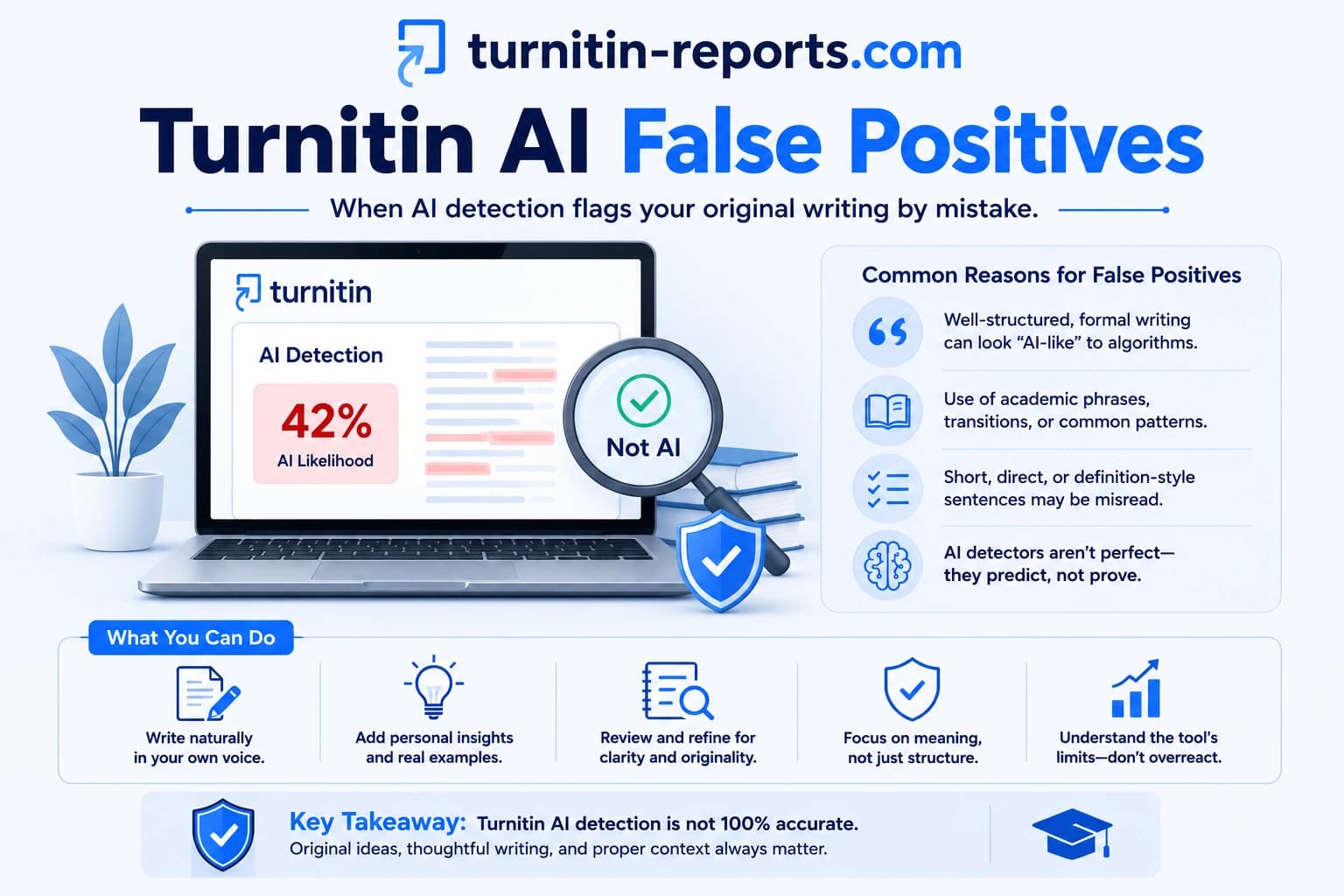
The false positive risk is real and documented. Independent analyses find false positive rates between 5% and 20% depending on the tool and the writing style. Turnitin itself states clearly that its AI score should not be treated as conclusive evidence and is best used to initiate a conversation with the student — not as a basis for penalty on its own. If you are facing a misconduct allegation based on an AI detection score, gather everything that documents your writing process: drafts, browser history, version history from your word processor or Google Docs, research notes, and any correspondence related to the assignment. Our post on Turnitin AI false positives covers what to do in detail if you believe you have been wrongly flagged.
Frequently asked questions
Can professors detect AI paraphrasing without using Turnitin?
Yes, often. Professors who know a student's prior writing have a personalised baseline. A sudden improvement in writing quality, a shift in vocabulary or register, generic arguments that miss the specific assignment, or fabricated citations are all signals that experienced instructors notice without any software. The more prior work a professor has seen from you, the more reliable their judgement becomes.
Does QuillBot bypass Turnitin's AI detection?
Not reliably, and increasingly not at all. Turnitin launched a dedicated AI paraphrasing detection layer in July 2024 specifically targeting text that was AI-generated and then processed through tools like QuillBot. The feature identifies the statistical residue that paraphrasing leaves behind and reports it as a separate category in the AI writing report. The underlying perplexity and burstiness patterns that characterise AI text are not fully erased by synonym substitution.
What is the difference between perplexity and burstiness?
Perplexity measures how predictable each word choice is — AI text is highly predictable because it selects the most statistically probable words. Burstiness measures the variation in sentence length and rhythm across a document — AI text tends to produce uniform sentence lengths, while human writing naturally varies between short and long sentences. Both properties persist even after paraphrasing because they reflect how the AI model generates text, not just which words it chose.
What should I do if I'm falsely accused of using AI?
Collect everything that documents your writing process immediately — drafts, outlines, revision histories, browser history showing your research, and any notes you took while writing. Request the full Turnitin report and the specific scoring criteria being applied. Turnitin's own guidance states the AI score should not be the sole basis for a misconduct finding. Most institutions have a formal appeal process, and a high AI score alone is not sufficient evidence to sustain a finding if you can demonstrate your writing process.
Ready to check your paper?
Get your Turnitin report in minutes.
Same report your institution generates — delivered privately, fast.