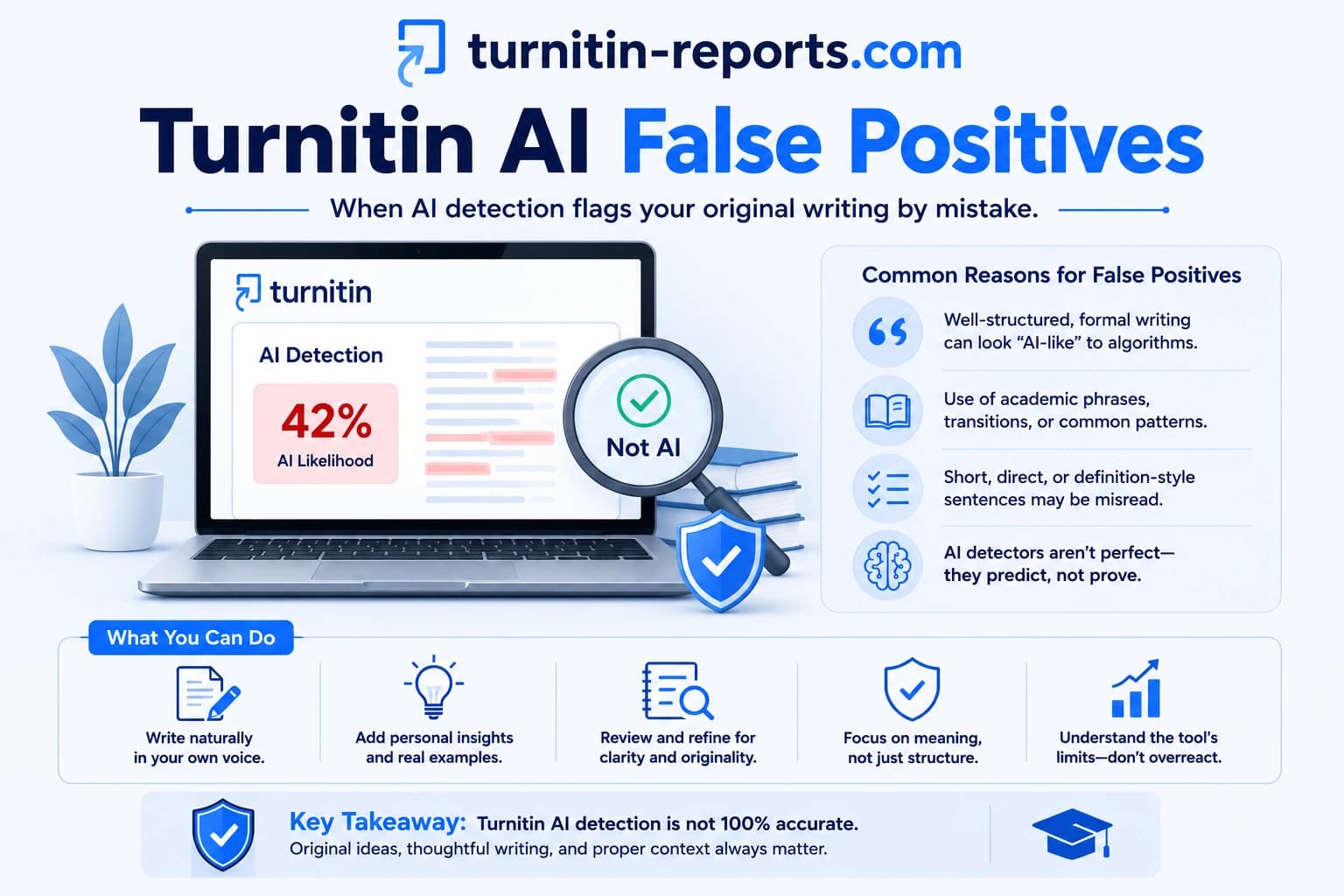
Can You Get Expelled for a High Turnitin Score?
No similarity score and no AI detection score has ever, on its own, resulted in expulsion. Turnitin produces data — humans make misconduct findings. Here is exactly what has to happen before expulsion is even possible, where most cases actually end, and what genuinely does trigger the most serious outcomes.
Every student who opens a Turnitin report with a high similarity percentage or a jarring AI score asks some version of the same question: can this get me expelled? The answer — clearly stated before anything else — is that no similarity score and no AI detection score has ever, on its own, resulted in expulsion from a university. Turnitin produces a data output. A human academic integrity panel decides what that data means, whether a violation occurred, and what penalty is proportionate. Those are two entirely different steps, and the gap between them is where most students' fears live.
This post walks through the full chain: what the score actually is, what process has to happen before expulsion becomes possible, where on that chain most cases actually end, and what genuinely does trigger the most serious outcomes. It also covers the full guide to consequences for international students, for whom the stakes run higher than for domestic students.
The short answer: no, not from a score alone
Turnitin does not expel students. It does not make misconduct findings. It does not even communicate directly with your institution's academic integrity office. What Turnitin does is generate a report — a similarity percentage showing matched text, or an AI Writing indicator showing estimated probability of AI authorship — and deliver that report to the instructor who ran the submission.
Expulsion is a formal institutional decision that sits at the far end of a structured process involving investigation, notice to the student, a hearing, a finding of serious intentional misconduct, a penalty decision, and usually an appeal. Between a high Turnitin score and expulsion, every single one of those steps has to happen. Most cases do not make it past the first two.
The February 2026 ruling in Orion Newby v. Adelphi University made this explicit as a matter of law. The court ruled that a misconduct finding based on an AI detection score alone was “without valid basis” — not because the score was necessarily wrong, but because a score is not a finding of fact. That ruling now establishes precedent for the principle that a number from a tool is not, by itself, sufficient to sustain a misconduct determination.
Similarity score vs. plagiarism finding
Two distinctions matter here and they matter precisely.
First: a similarity score is not a plagiarism finding. When Turnitin returns a 45% similarity score, it is telling you that 45% of your submitted text matches text in its databases. That match could reflect properly quoted and cited sources. It could reflect standard academic phrasing. It could reflect the reference list, which Turnitin includes unless an instructor sets it to exclude. It could reflect text you submitted yourself in a previous assignment. Understanding your similarity score properly requires looking at what is actually matched, not just the headline number.
Second: a plagiarism finding is not an expulsion order. Even after a formal investigation concludes that a violation occurred — that sources were misrepresented, that attribution was deliberately withheld, that someone else's work was submitted as the student's own — the outcome is calibrated to the severity and the circumstances. Most first-offence findings result in a grade penalty, not suspension, and certainly not expulsion.
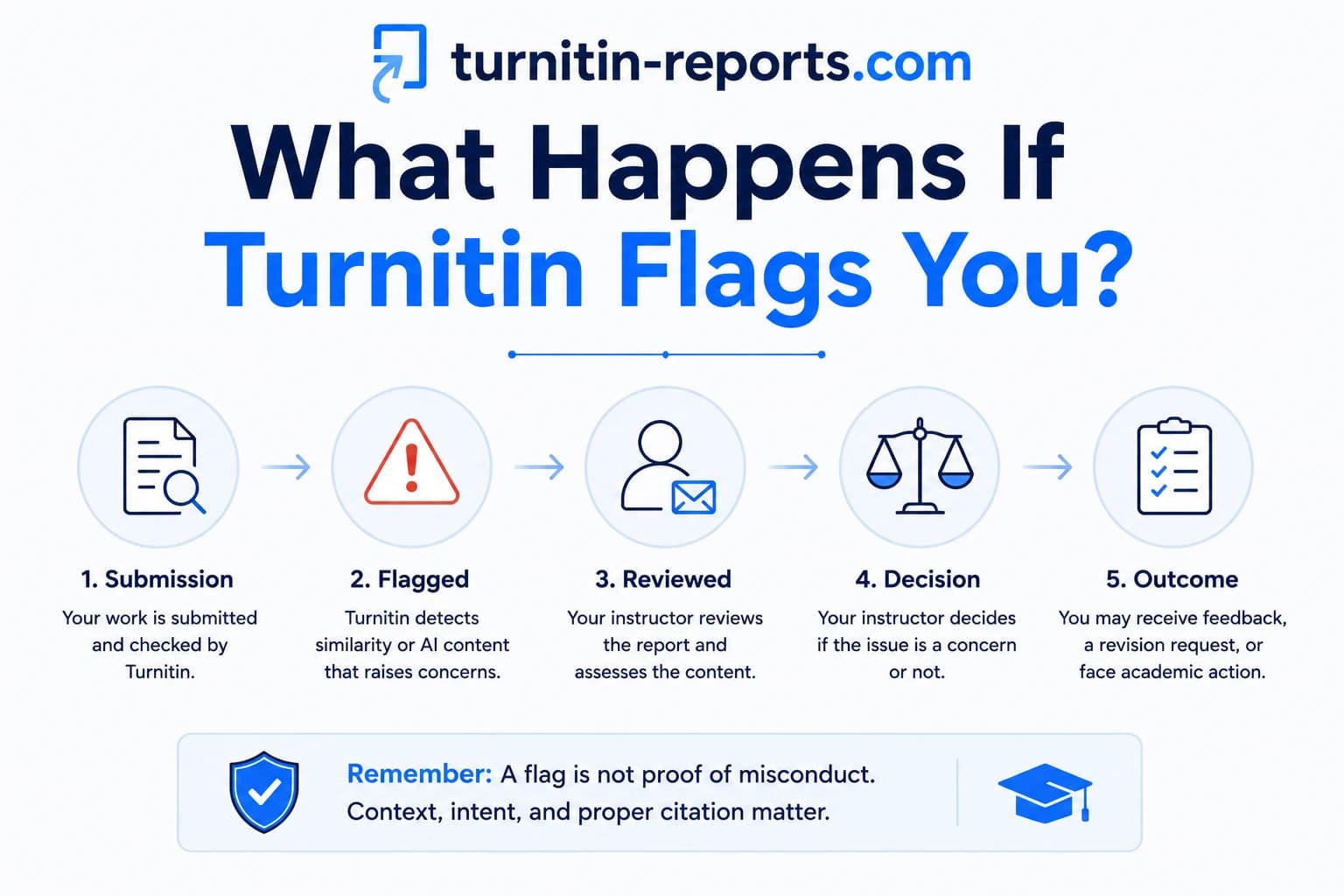
What happens when Turnitin flags you covers the immediate procedural steps in detail. The short version: flagging initiates an instructor review, not a disciplinary proceeding. Most flagged submissions are resolved at the instructor level with no formal misconduct process at all.
What actually triggers expulsion proceedings
Expulsion is the terminal penalty in an academic integrity system. It is reserved for conduct that is so serious — or so persistent — that continued membership in the academic community cannot be justified. In practice, three categories of conduct are most likely to put a student in that position.
Contract cheating and essay mills. Submitting work purchased from another person or a commercial service is treated with maximum seriousness at most institutions because it is deliberate, premeditated, and a direct fraud on the assessment process. Whether Turnitin can detect a purchased essay is a separate question from whether contract cheating triggers serious consequences — it does, and it is one of the few first-offence categories where expulsion is a realistic outcome at institutions with strong integrity codes.
Fabrication of data or research fraud. Inventing sources, falsifying experimental results, or misrepresenting research data is treated at most research universities as an integrity violation of the highest order. These cases frequently lead to expulsion or withdrawal of awarded degrees even years after graduation.
Repeat serious violations. A student who has a prior formal finding of misconduct and commits another violation — especially if the second offence is deliberate — is on the escalation track that leads to suspension and then expulsion. The graduated penalty scale exists precisely to move repeat violators toward more serious consequences.
The graduated penalty scale
Every institution with a functioning academic integrity system uses some version of a graduated penalty structure. The specifics vary, but the broad shape is consistent across most universities, including those whose codes are public benchmarks: the Stanford Honor Code, the Oxford student conduct framework, and the principles documented by the International Center for Academic Integrity.
- Informal resolution or written warning. For minor first offences — improper citation, inadequate paraphrasing, borderline similarity on a low-stakes assignment — many institutions allow instructors to resolve the matter without a formal hearing. The student receives a warning and, sometimes, a requirement to resubmit or complete an academic integrity module.
- Grade zero on the assignment. The most common formal outcome for a first offence of moderate seriousness. The paper is failed; the course grade reflects that failure, but no further academic penalty applies.
- Course failure. Where the violation is serious enough to undermine the entire assessment of a course, or where a student is found to have violated integrity rules on multiple submissions within the same course, a failing grade for the whole course is the outcome.
- Suspension. Temporary exclusion from the institution, typically one or two semesters. Used for serious violations or where a pattern of misconduct exists. A suspension goes on the academic record and has significant downstream effects on graduate school applications and employment references.
- Expulsion. Permanent exclusion. Reserved for the most serious cases and, at most institutions, for repeat offenders who have already been sanctioned. An expulsion is almost always accompanied by a transcript notation that follows the student permanently.
Most first-time similarity or AI detection flags — absent clear intent, purchased content, or outright fabrication — resolve at the first or second step on this scale. Expulsion sits at the far end for a reason.
How intent changes the outcome
The single most consequential variable in any academic misconduct investigation is intent. The difference between a careless citation error and deliberate plagiarism is not the Turnitin score — both can produce a high similarity percentage. The difference is whether the student intended to deceive.
Intent shapes the investigation, the finding, and the penalty at every stage. An instructor who believes a high similarity score reflects poor paraphrasing practice rather than deliberate theft is likely to handle the matter informally. A panel that finds a student submitted an essay purchased from a third party is operating in an entirely different register, even if the similarity score on both papers is identical.
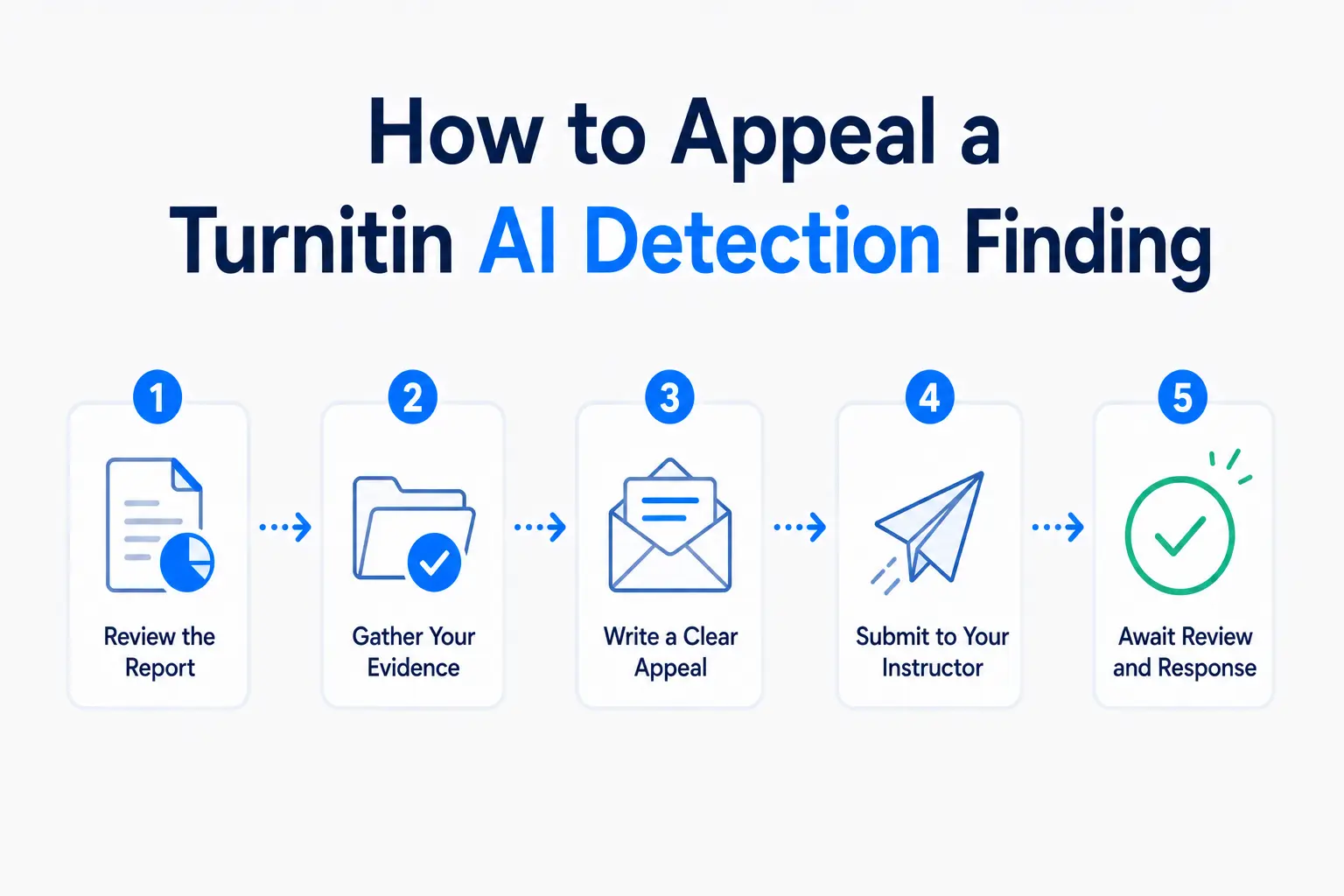
The practical implication for students: the evidence you can produce about your process — drafts, version history, research notes, communications with your tutor — speaks directly to intent. A student who can demonstrate a human drafting process that evolved over time presents a very different picture from one who cannot explain their own work when asked. If you have received a flag and are concerned, the post on how to appeal a Turnitin finding sets out exactly what that evidence looks like and how to present it.
Turnitin's own guidance reinforces this. The company states explicitly that AI Writing indicator scores should not be used as the sole basis for a misconduct determination. The score is intended to flag a paper for instructor review, not to establish guilt. The documented existence of documented Turnitin AI false positives is precisely why intent — established through process evidence — is what drives outcomes, not numbers alone.
First offence vs. repeat violations
The distinction between a first offence and a repeat violation is one of the clearest fault lines in academic integrity outcomes.
First offences, at most institutions, are handled with educational intent. The system assumes the student made a mistake, a poor judgment call, or lacked sufficient understanding of citation and attribution requirements. The penalty is designed to be serious enough to deter repetition without being career-ending. A grade zero on one assignment is a significant academic consequence; it is not an expulsion.
Repeat violations shift the presumption entirely. A student who has a prior finding on record — who has been through the process, received guidance, and committed another violation — has demonstrated that educational intervention did not work. At that point, institutions move up the penalty scale deliberately. A second finding of intentional misconduct at most universities triggers suspension at minimum. A third finding, or a second finding of a serious category of misconduct like contract cheating, is where expulsion proceedings become genuinely likely.
This is why the most important response to any first flag is to engage correctly with the process rather than ignore it or handle it poorly. How a first instance is resolved affects the institutional record that shapes outcomes for any future incident.
What expulsion means for your academic record
For students who do end up in expulsion proceedings, understanding what a finding actually means for the record is important.
An expulsion is recorded on the academic transcript. Most institutions annotate the transcript with a notation indicating the student left under a finding of academic misconduct. This notation is visible to any institution or employer that requests the transcript, and it is permanent in most cases. Some institutions allow expunged records after a period of time if the student successfully petitions, but this is exceptional rather than standard.
Graduate school applications, professional licensing bodies, and employers in regulated industries routinely ask about academic misconduct findings. A transcript notation is not automatically disqualifying in all contexts, but it requires disclosure and explanation, and it affects admissions and hiring decisions.
There is also the question of credit recovery. A student expelled mid-degree loses the credits associated with the semester in which the expulsion occurs, and often cannot transfer those credits to another institution because the expulsion record follows the transcript.
The Newby v. Adelphi ruling noted that a successful appeal that overturns a misconduct finding typically results in the record being expunged. This is one reason the appeal process — engaged promptly and with proper evidence — is worth pursuing even when the institutional pressure to accept a penalty and move on feels significant.
International students: the compounded risk
For students on visas, the consequences of a misconduct finding that reaches the level of suspension or expulsion are compounded by immigration law in ways that domestic students do not face.
The chain runs like this: a misconduct finding leads to suspension or expulsion; a suspension or expulsion changes the student's enrolment status; a change in enrolment status triggers reporting obligations from the institution to the immigration authority; the immigration authority acts on the report to curtail or cancel the visa. The academic consequence and the immigration consequence are separate legal events, but they are triggered in sequence by the same institutional decision.
In the United States, an F-1 visa holder whose enrolment is terminated for misconduct will have their SEVIS record updated by the Designated School Official, which terminates F-1 status and typically results in a 15-day window to depart. In the UK, sponsored student visa holders whose withdrawal is reported to UKVI face a 60-day curtailment period. In Australia, expulsion for misconduct breaches Condition 8202 on the subclass 500 visa and can trigger a statutory three-year exclusion from Australian visas under Regulation 2.43 of the Migration Regulations 1994.
The full guide to consequences for international students covers each jurisdiction in detail, including the specific reporting timelines and what the appeal window looks like in each country. The critical point is that international students should contact their institution's international student office before their academic adviser and before their instructor, because the international office can sometimes pause institutional reporting while an internal appeal is in progress — which preserves visa status during the most critical window.
You should also check your score before submitting where possible. For international students especially, catching a potential flag before submission — when you can still revise — is far preferable to navigating the appeal process under dual academic and immigration pressure.
Frequently asked questions
Can I be expelled just for having a high Turnitin percentage?
No. A similarity percentage is a report output, not a misconduct finding. Expulsion requires a formal investigation, a hearing, a finding of serious intentional misconduct, and a penalty decision — none of which are triggered automatically by any Turnitin score. The instructor reviews the report, and most high-similarity cases are resolved informally or result in an assignment-level grade penalty, not expulsion proceedings.
What percentage similarity triggers expulsion?
No percentage triggers expulsion. There is no threshold at which a similarity score automatically initiates formal misconduct proceedings. What matters is the nature of the matched content — whether it reflects deliberate unattributed copying, purchased content, or something more ambiguous like inadequate paraphrasing. A 70% similarity score from a heavily quoted and cited paper is a very different situation from a 30% score on a paper where the matched passages are presented as the student's own words.
Does a first plagiarism offence ever result in expulsion?
Rarely, and only for the most serious categories of first-offence conduct. Submitting entirely purchased work, fabricating research data, or committing identity fraud in an examination context are the categories most likely to result in expulsion even for a first offence. Typical first offences — improper citation, inadequate paraphrasing, borderline similarity — result in a grade penalty or a formal warning, not expulsion.
How does expulsion differ from suspension?
Suspension is temporary exclusion — typically one or two semesters — after which the student may apply to return. Expulsion is permanent exclusion with no right of return. Both result in transcript notations. Suspension is the more common severe sanction; expulsion is reserved for the most serious cases and, at most institutions, primarily for students who have already been sanctioned and reoffended. An appeal that successfully overturns either finding typically results in the record being expunged.
What if I'm an international student facing expulsion?
Contact your institution's international student office immediately — before your academic adviser, before your instructor. The international office can advise on your institution's specific reporting timelines to the immigration authority and may be able to pause reporting while an internal appeal proceeds, which preserves your visa status during the appeal window. You should also obtain advice from an immigration lawyer, not only the university adviser, because the interaction between the academic process and the immigration system requires expertise in both. The full guide to consequences for international students covers each jurisdiction's specific timelines and procedures in detail.
Ready to check your paper?
Get your Turnitin report in minutes.
Same report your institution generates — delivered privately, fast.
Related articles
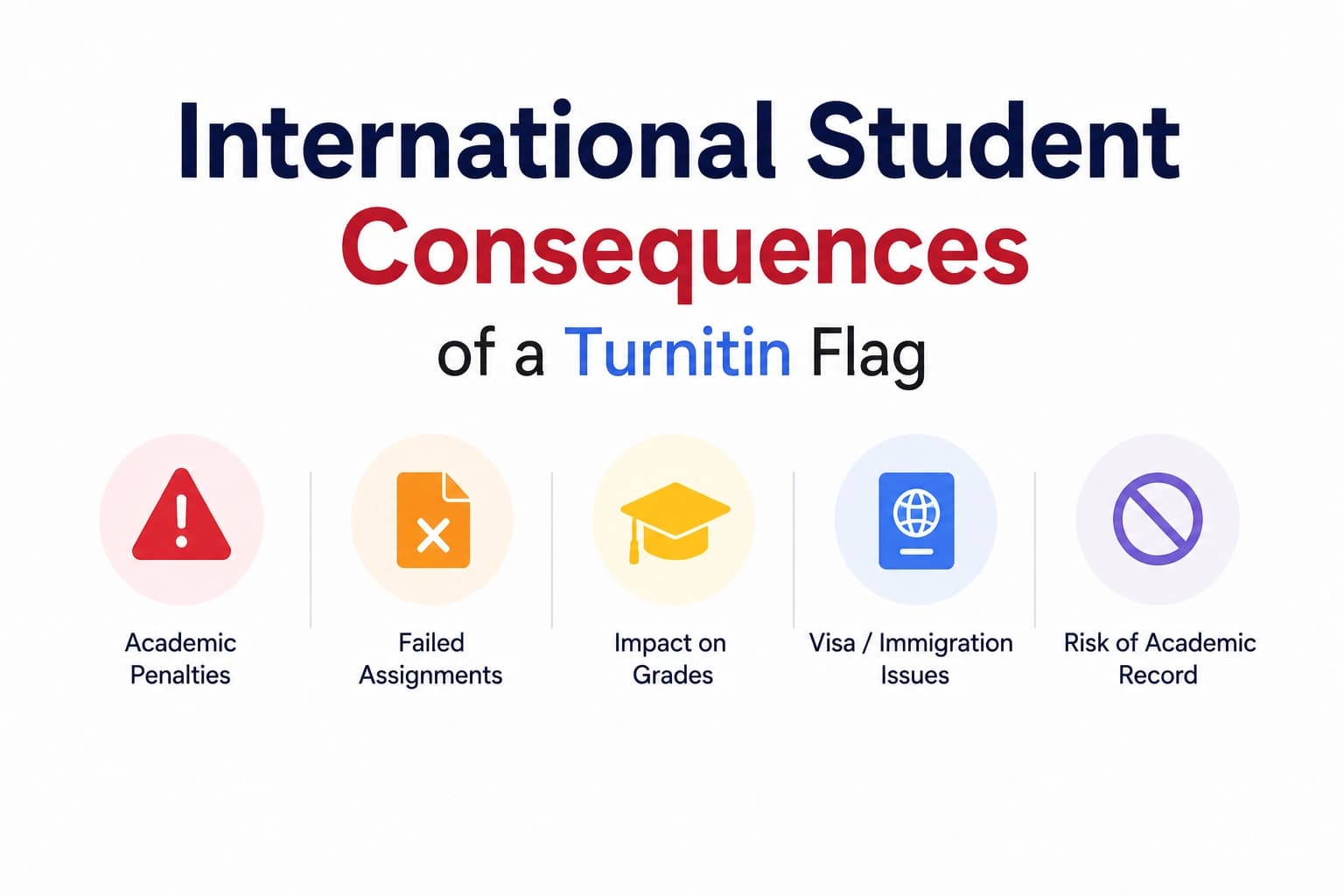
What Happens When an International Student Fails a Turnitin Check? Visa and Immigration Consequences
10 min read · July 13, 2026