What Is Turnitin? How It Works, What It Checks, and Who Uses It
Turnitin is used by over 16,000 institutions and 71 million students — but most students are never told exactly how it works. Here's everything: what it checks, what the two reports mean, and what Turnitin actually cannot do.
If your university has ever asked you to submit an essay through an online portal that generates a percentage score, there is a strong chance that tool was Turnitin. It is used by over 16,000 institutions across more than 140 countries, and the vast majority of students encounter it without ever being told exactly what it is, what it checks, or how it works. This guide covers everything — from what Turnitin actually is to what the reports it produces mean for your submission.
What is Turnitin?
Turnitin is a private, for-profit software company that provides academic integrity tools to educational institutions. It was founded in 1996 at the University of California, Berkeley, and is now owned by Advance Publications. It is not a free public tool — institutions pay for access, and students use it through their university's learning management system. Individual students cannot purchase a Turnitin account directly.
Its core function is checking submitted work against a large database of existing content and reporting how much of the submitted text matches sources already in that database. It does not make judgements about plagiarism — that decision is made by the instructor who reviews the report. Turnitin describes its role as helping educators identify work that warrants a closer look, not as a tool that issues verdicts.
What does Turnitin check against?
Turnitin runs your submission against three separate content databases simultaneously:
- Student paper repository. Over 1.9 billion previously submitted student papers from institutions worldwide. This is one of the most powerful sources in Turnitin's database — it means a paper submitted at one university can be matched against work submitted at another institution years earlier. Whether your submission is added to this repository depends on how the assignment is configured by your instructor.
- Internet content. Over 70 billion current and archived web pages. This covers publicly accessible content — websites, blogs, news articles, and anything else indexed on the open web.
- Academic publications. Over 69 million full-text scholarly articles from 47,000+ journals, contributed through the Crossref Similarity Check programme. This includes content behind paywalls — publishers grant Turnitin read-only access to full article text for comparison purposes. Our post on how Turnitin checks against published papers covers this in detail.
The two reports Turnitin produces
Turnitin generates two separate, independent reports. They measure completely different things and should not be confused with each other.
The Similarity Report compares your submitted text against the databases above and produces a percentage score showing how much of your text matches existing sources. A 20% similarity score means 20% of your text was found in other sources — it does not mean 20% was plagiarised. Properly cited quotes, your reference list, and standard academic phrases all contribute to the score. The instructor reviews the full report to determine whether the matches are legitimate. Our guide on understanding your Turnitin similarity score explains every percentage band.
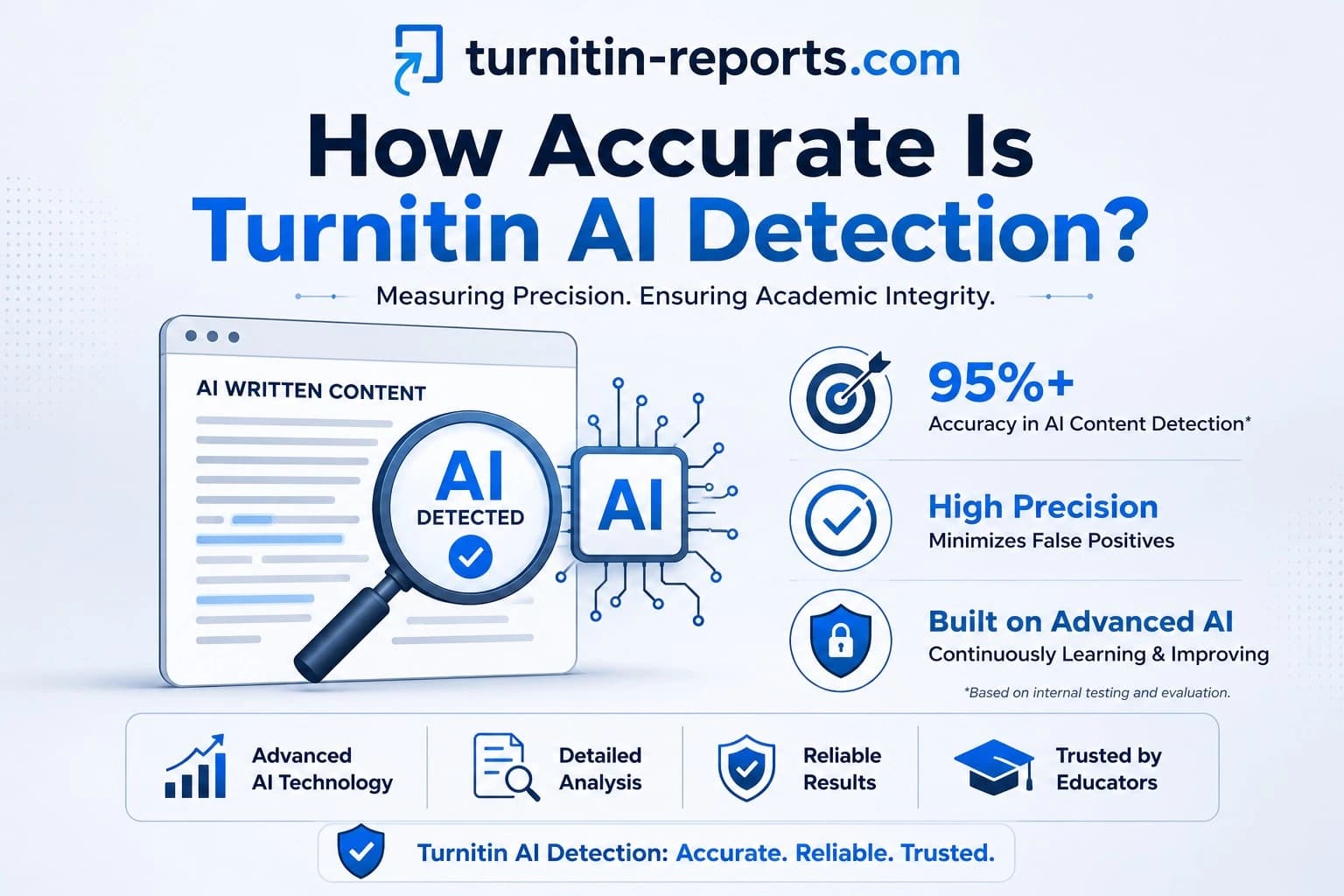
The AI Writing Report is entirely separate from the Similarity Report and uses a different method entirely. Rather than comparing your text against a database, it uses linguistic analysis — examining word predictability, sentence length variation, and writing patterns — to assess whether passages are statistically consistent with AI-generated content. Turnitin's own infographic comparing the two reports makes clear that a submission can have a low similarity score and a high AI score, or vice versa — the two numbers are completely independent. Our guide on how accurate Turnitin AI detection is explains what the scores mean and where the tool has limits.
Who uses Turnitin and how
Turnitin is used by over 16,000 educational institutions covering more than 71 million students worldwide. It is integrated into learning management systems including Canvas, Blackboard, Moodle, and Microsoft Teams — students submit their work through the LMS and Turnitin processes it in the background, returning a report to the instructor.
Students typically see their own report through the same portal, depending on how the instructor has configured the assignment. Some instructors make reports immediately visible; others withhold them until after the deadline or do not share them with students at all.
Individual students cannot purchase or access Turnitin directly — it is sold exclusively to institutions. If you want to check your own paper before your institution does, pre-submission checking services run your document through Turnitin and return the same report your instructor will see.
Turnitin products beyond the similarity report
Turnitin is not a single product — it is a suite of tools. The products most relevant to students are:
- Turnitin Feedback Studio. The core institutional product. Combines the Similarity Report with inline instructor feedback, rubrics, and grading tools. AI detection is available as an add-on through Turnitin Originality.
- Draft Coach. A browser extension that allows students to self-check drafts for similarity and citation issues before final submission. Requires an institutional license — not all universities provide it.
- iThenticate. A separate product aimed at researchers, journal editors, and publishers rather than students. It uses the same detection technology but is designed for manuscript screening before publication. Unlike the student product, iThenticate can be accessed by individuals through a credit system. Our full post on what iThenticate is explains who it is for and how it differs.
- Gradescope. An AI-assisted grading platform focused on STEM subjects. Handles handwritten exam marking and auto-groups similar student answers. Less relevant to most essay submissions.
What Turnitin does not do
A few common misconceptions worth clearing up:
- Turnitin does not accuse students of plagiarism. It reports similarity percentages and flags passages. The determination of whether misconduct occurred is always made by a human — your instructor or an academic integrity officer.
- A high similarity score is not automatic evidence of plagiarism. A paper with 40% similarity may be entirely legitimate if that 40% is properly cited quotes and a reference list. A paper with 5% similarity could still contain plagiarism if one uncited paragraph was lifted from a source.
- Turnitin does not check every source ever written. Publishers who are not part of the Crossref Similarity Check programme are not in the database. Very recently published content may not yet be indexed. A 0% similarity score does not guarantee a paper is original — it means no text matches were found in Turnitin's current database.
- The AI report is not a verdict. Turnitin itself states the AI score should not serve as the sole basis for misconduct findings. False positives are real — non-native English speakers and writers with simple, consistent styles can receive elevated AI scores on entirely human-written work.
Frequently asked questions
Is Turnitin free for students?
Turnitin is not free for students to access independently. It is a paid service purchased by institutions, and students access it through their university's learning management system. Individual students cannot buy a Turnitin subscription directly. The only Turnitin product available to individuals is iThenticate, which is aimed at researchers rather than students.
Does Turnitin store my paper?
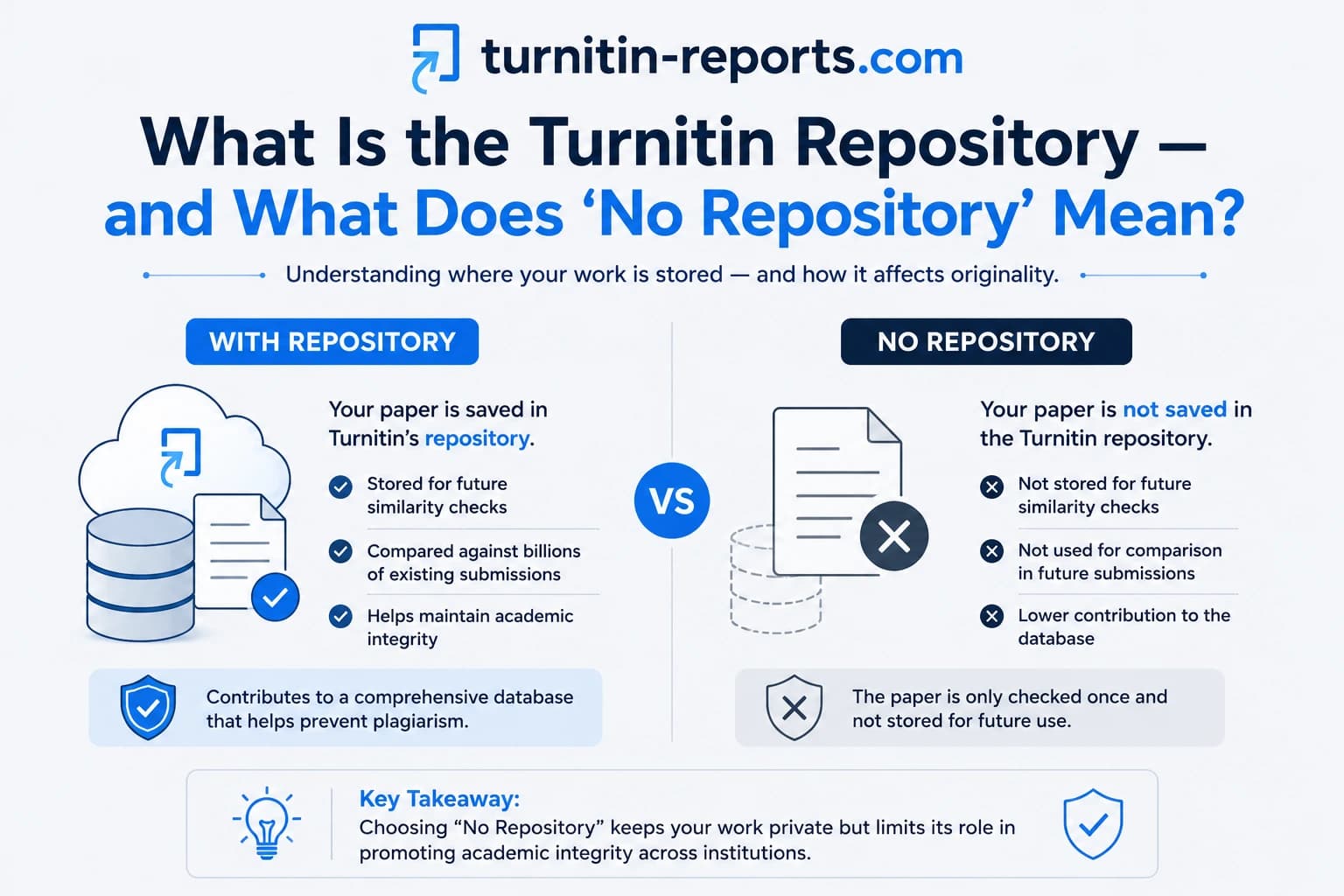
It depends on how your instructor has configured the assignment. Assignments set to “standard repository” settings add your submission to Turnitin's student paper database, where it can be matched against future submissions. Assignments set to “no repository” process your paper without storing it. If you are unsure which setting applies to your submission, ask your instructor or check the assignment settings. Our post on Turnitin's repository settings explains the difference in full.
How many institutions use Turnitin?
Over 16,000 educational institutions worldwide use Turnitin, covering more than 71 million students. It is integrated into the major learning management systems used by universities and schools across more than 140 countries.
Can Turnitin detect AI-written content?
Yes, through a separate AI Writing Report that is generated alongside the Similarity Report. The AI detector uses linguistic analysis rather than database comparison — it assesses word predictability and writing pattern consistency to identify content statistically consistent with AI generation. The two reports are independent and measure completely different things.
Ready to check your paper?
Get your Turnitin report in minutes.
Same report your institution generates — delivered privately, fast.