Can Turnitin Detect Google Gemini AI Writing? Detection Rates by Model
Turnitin detects Gemini — but with meaningfully lower accuracy than ChatGPT. Gemini 2.5 Pro has tested at just 53% detection versus ChatGPT's 90%. Here's why newer Gemini models are harder to catch, what the report looks like, and what the Google Docs AI writing assistant means for your submission.
Turnitin's AI Writing Report was built primarily on ChatGPT and GPT-family models — but Google's Gemini has rapidly become one of the most widely used AI writing tools among students. The detection rates for Gemini are measurably different from ChatGPT, and understanding those differences matters if you are a student trying to understand what your AI score reflects, or an educator trying to understand what the report is and is not catching.
Does Turnitin officially detect Gemini?
Yes. Turnitin's AI Writing Report is not limited to ChatGPT — its model is trained to detect output from all major large language models, including Google's Gemini family. Berkeley College Library's AI detection guidance confirms that Turnitin's detector covers both ChatGPT and Google Gemini. Turnitin has updated its training data continuously as new models have been released, and Gemini Pro, Gemini 2.5 Flash, and Gemini 2.5 Pro are all within the detection scope.
However, coverage and detection accuracy are different things. Turnitin can detect Gemini — the question is how reliably.
How detection rates compare between Gemini and ChatGPT
Independent testing published in 2025 found meaningful differences in Turnitin's detection rates across AI models. In a test of 50 prompts across each model:
- ChatGPT (GPT-4o): ~90% detection rate — the most consistently flagged model
- Google Gemini (overall): ~87% detection rate on raw output — slightly lower than ChatGPT
- Gemini 2.5 Flash: flagged approximately 70% of the time in testing
- Gemini 2.5 Pro: flagged approximately 53% of the time — the lowest detection rate among major Gemini variants
- Claude (Anthropic): ~84% detection rate — lower than ChatGPT, likely because Anthropic's training produces more varied output
The variation across Gemini versions is significant. Gemini 2.5 Pro's 53% detection rate means that roughly half of fully AI-generated text from that model slips through Turnitin's detector — more than double the miss rate compared to ChatGPT. This gap reflects the difference between Turnitin's training data distribution: the model was built heavily on GPT-family output and generalises to other models with varying confidence.
Why Gemini is harder to detect than ChatGPT
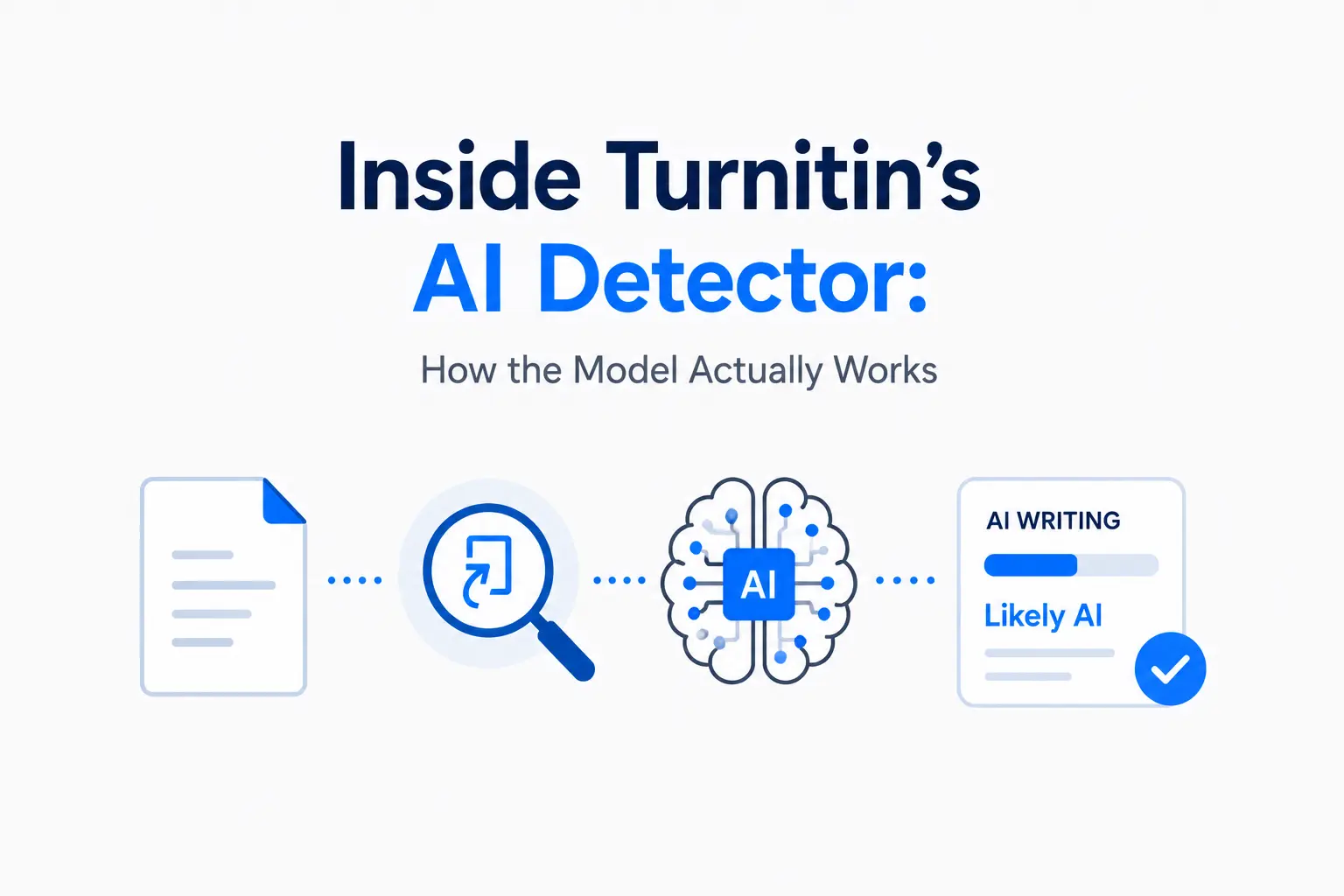
Turnitin's detection relies on statistical patterns — specifically perplexity (how predictable each word choice is) and burstiness (how uniform sentence lengths are). The patterns in AI-generated text that these metrics capture are a function of how each model was trained, and different models produce different statistical signatures.
Google's Gemini models, particularly the Pro variants, have been updated to produce more varied and naturalistic output compared to earlier GPT models. This variation in output style reduces the statistical gap between Gemini-generated text and human writing, making it harder for a detector trained primarily on GPT output to identify Gemini text with the same confidence.
The deeper issue is that Turnitin's training data is weighted toward whatever AI models were most prevalent when each version of the detection model was trained. As our post on how Turnitin's AI detection works explains, AIW-1 was trained mainly on GPT-3 and GPT-3.5, and AIW-2 expanded to include GPT-4, Claude, and Gemini — but the relative representation of each model in the training data affects detection confidence.
What a Turnitin AI report looks like for Gemini text
When Turnitin detects Gemini-generated text, the AI Writing Report looks the same as for any other AI model: flagged passages are highlighted in cyan (directly AI-generated) or purple (AI-generated and subsequently paraphrased). The report does not identify which AI model was used — it only indicates that the statistical patterns of the text are consistent with AI generation.
This means a student who used Gemini and a student who used ChatGPT will receive qualitatively similar reports — the difference is only in the probability that any given passage is flagged at all. There is no “Gemini flag” or model-specific indicator in the report.
What about Google Bard — the predecessor?
Google Bard was the original branding for Google's conversational AI before it was renamed Gemini in February 2024. The underlying model technology is the same family. Text generated by Bard is effectively the same as early Gemini output and is detected by Turnitin in the same way. The name change did not represent a fundamental architectural change that would affect detection.
Gemini in Google Docs — a specific risk
One specific use pattern to be aware of: Google Workspace integrates Gemini AI directly into Google Docs as a writing assistant. Students who write in Google Docs and use the built-in “Help me write” or “Refine” features are using Gemini's generative capabilities. The text generated through these features carries the same AI statistical properties as any other Gemini output and is subject to the same detection rates on Turnitin.
The question of whether using Google Docs' AI writing assistance constitutes academic misconduct depends on your institution's AI use policy — but from Turnitin's detection perspective, it is treated the same as any other AI-generated text. Our post on how Turnitin handles Google Docs submissions covers the submission process, and our post on how Grammarly triggers Turnitin AI detection covers the parallel issue with AI writing assistants built into other tools.
False positives and Gemini
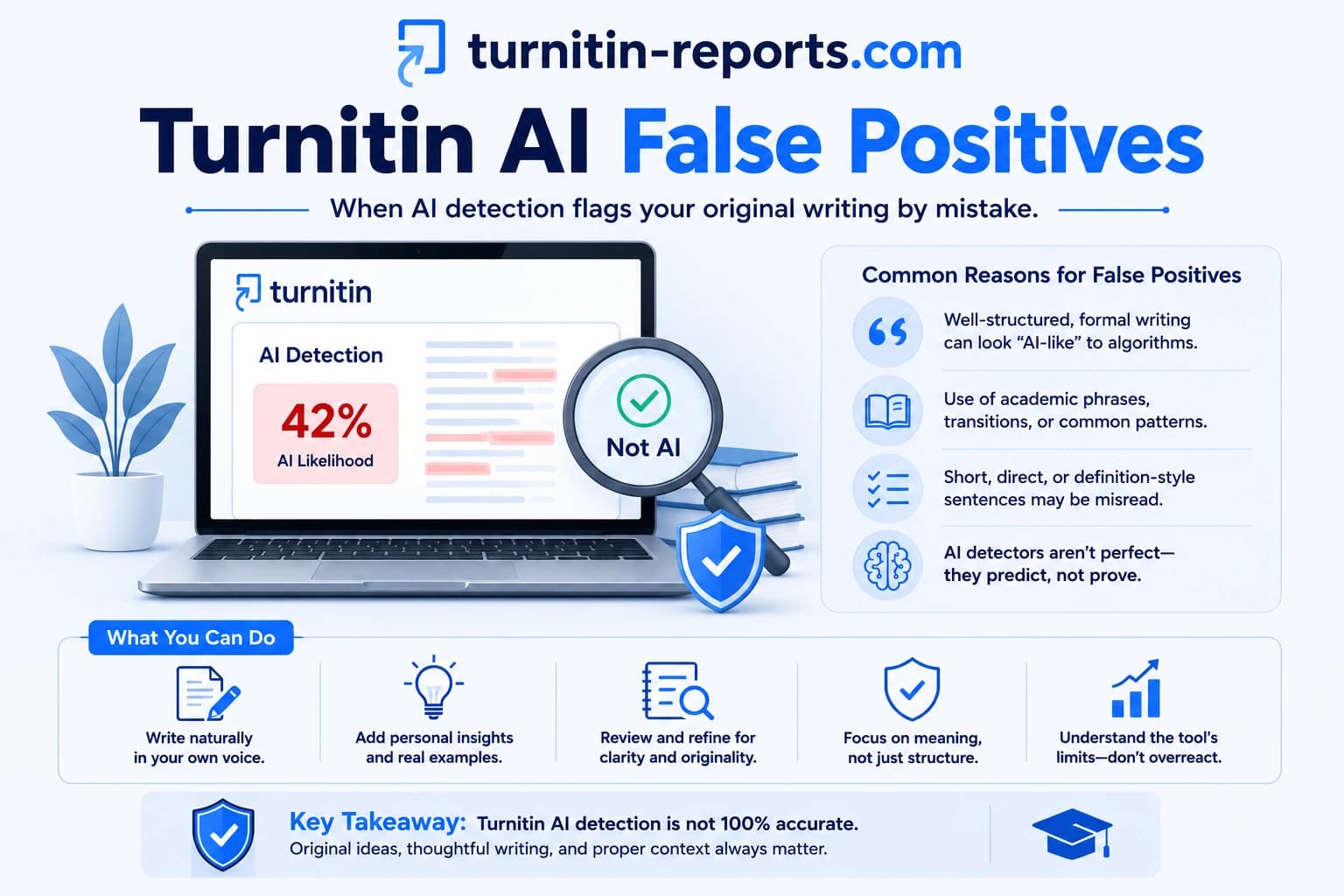
The same false positive risk that applies to ChatGPT detection applies to Gemini detection. Turnitin's detector measures statistical properties of text — it does not definitively identify AI authorship. Human writing that happens to be highly structured, formally polished, or written in a very uniform style can receive elevated AI scores regardless of which model was or was not used.
Non-native English speakers remain the highest-risk group for false positives — the Stanford HAI research finding of 61.3% false positive rates across seven detectors applies equally to Gemini detection as to ChatGPT detection, since the underlying mechanism is the same. Our post on Turnitin AI false positives covers who is at risk and what to do if you are flagged.
Frequently asked questions
Can Turnitin detect Google Gemini AI writing?
Yes. Turnitin's AI Writing Report detects Gemini output, but with lower average detection rates than ChatGPT. Overall Gemini detection averages around 87% on raw output, but varies significantly by model version — Gemini 2.5 Pro has been tested at approximately 53% detection, meaning roughly half of its output passes through undetected. The report does not specify which AI model was used; it only shows AI-generated patterns.
Is Gemini harder to detect than ChatGPT on Turnitin?
Yes, particularly for newer Gemini Pro variants. ChatGPT (GPT-4o) is detected at around 90% on Turnitin, while Gemini 2.5 Pro has tested at around 53% detection. The gap reflects Turnitin's heavier training on GPT-family output and Gemini's more varied writing style in newer versions. This difference is version-specific — not all Gemini models perform the same.
Does using Google Docs' built-in AI writing feature get detected by Turnitin?
Yes. The AI writing features built into Google Docs (the “Help me write” and “Refine” functions) use Gemini. Text generated through these features carries the same statistical properties as any other Gemini output and will be subject to Turnitin's detection in the same way as text produced in the standalone Gemini interface.
What does the Turnitin report show if Gemini was used?
The AI Writing Report shows the same cyan and purple highlighting for Gemini-generated text as for any other AI model. Turnitin does not identify which specific AI model produced the flagged text — only that the statistical patterns are consistent with AI generation. The overall AI score and the passage-level highlights look identical regardless of whether the text came from Gemini, ChatGPT, or Claude.
Ready to check your paper?
Get your Turnitin report in minutes.
Same report your institution generates — delivered privately, fast.