What Happens If You Fail a Turnitin Check? The Complete Guide
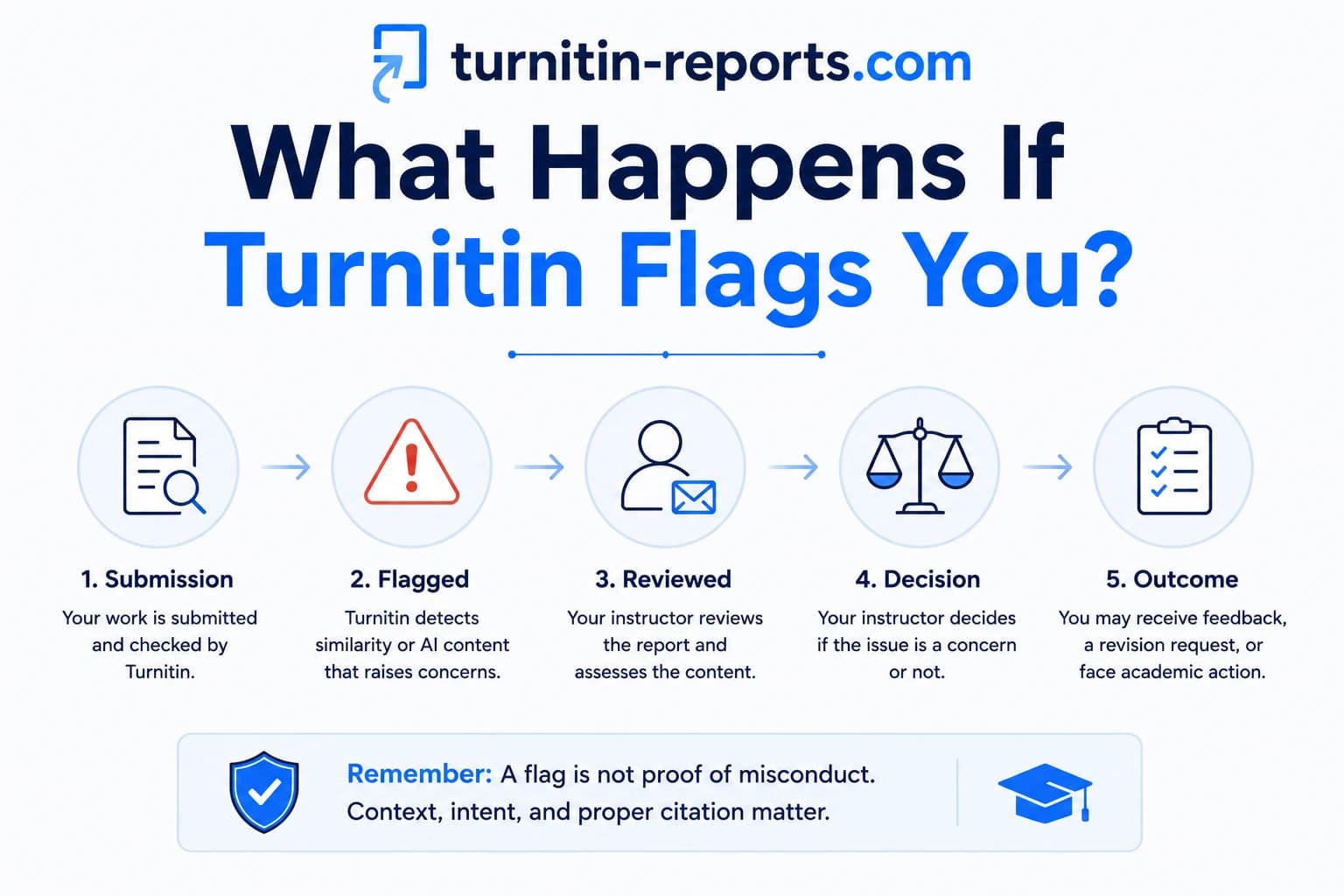
There is no pass or fail on Turnitin — the software produces a similarity score, not a verdict. But a high score can start a six-stage academic misconduct process that ends in anything from a warning to expulsion. Here is exactly what happens at every stage, what your rights are, and what to do immediately if you are flagged.
You submitted your paper, the Turnitin report came back with a high similarity score, and now you're wondering whether you've just “failed” the check. Here is the most important thing to understand before anything else: there is no pass or fail in Turnitin. The software does not grade you, accuse you, or report you. It produces a number. What happens after that number appears is a human process — and knowing exactly how that process works is what determines whether a high score becomes a serious problem or a brief conversation.
There is no pass or fail on Turnitin
Turnitin does not have a pass threshold, a fail threshold, or any built-in verdict. The Similarity Report measures the percentage of your submission that textually overlaps with content in Turnitin's database — web pages, academic journals, and over 1.6 billion previously submitted student papers. That overlap figure is all it produces.
Plagiarism is an academic judgement — a determination made by a person after reviewing what the matches are, where they came from, whether they are cited, and whether the overall pattern is consistent with honest scholarship. No software makes that determination. A 45% similarity score could mean your bibliography wasn't excluded, that you quoted extensively from primary sources, or that your field uses heavily standardised terminology. It could also mean something more serious. The score alone tells nobody which it is.
Turnitin's own documentation states explicitly that the similarity percentage is not a plagiarism score. If your institution has told students that anything above a certain number is automatically a problem, that is institutional shorthand — not how Turnitin actually works. Our guide to understanding your Turnitin similarity score explains what the colour bands and percentage ranges actually mean in practice, and our post on what counts as a good Turnitin score covers the discipline-specific context that changes everything.
What a high score actually triggers
When a Turnitin report shows a high similarity percentage, the first person to see it is usually your instructor. Their response is not automatic — it is a manual review. A careful instructor opens the full report and looks at the source breakdown: which passages are flagged, which sources they match, and whether the matches are explicable.
Specifically, they consider whether flagged text is properly cited, whether the reference list is inflating the overall figure, whether standard academic phrasing is driving matches across many sources, and whether the writing style in flagged sections is consistent with the rest of the paper and with your earlier work. Most experienced instructors deal with high similarity scores regularly and understand that many of them are entirely benign.
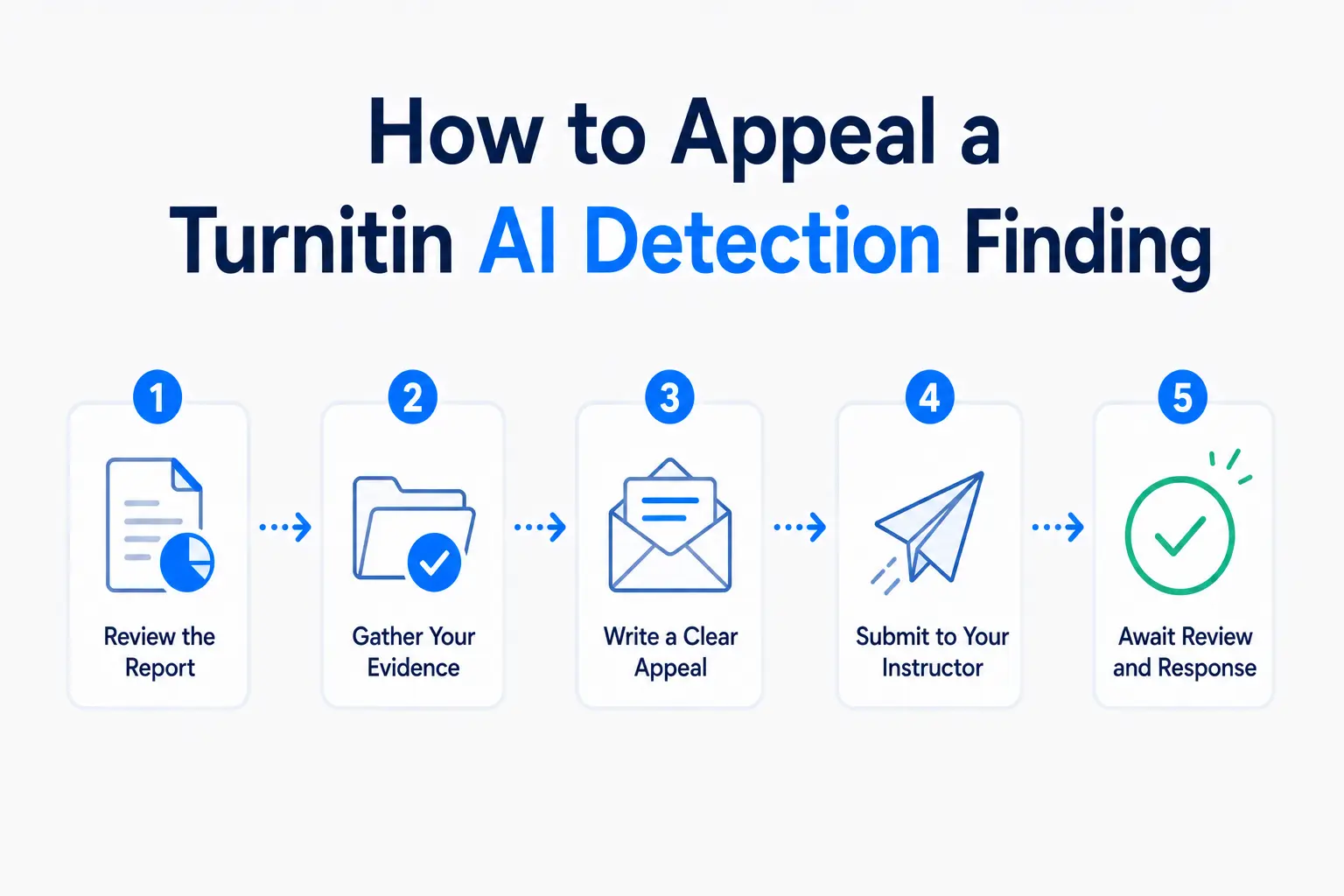
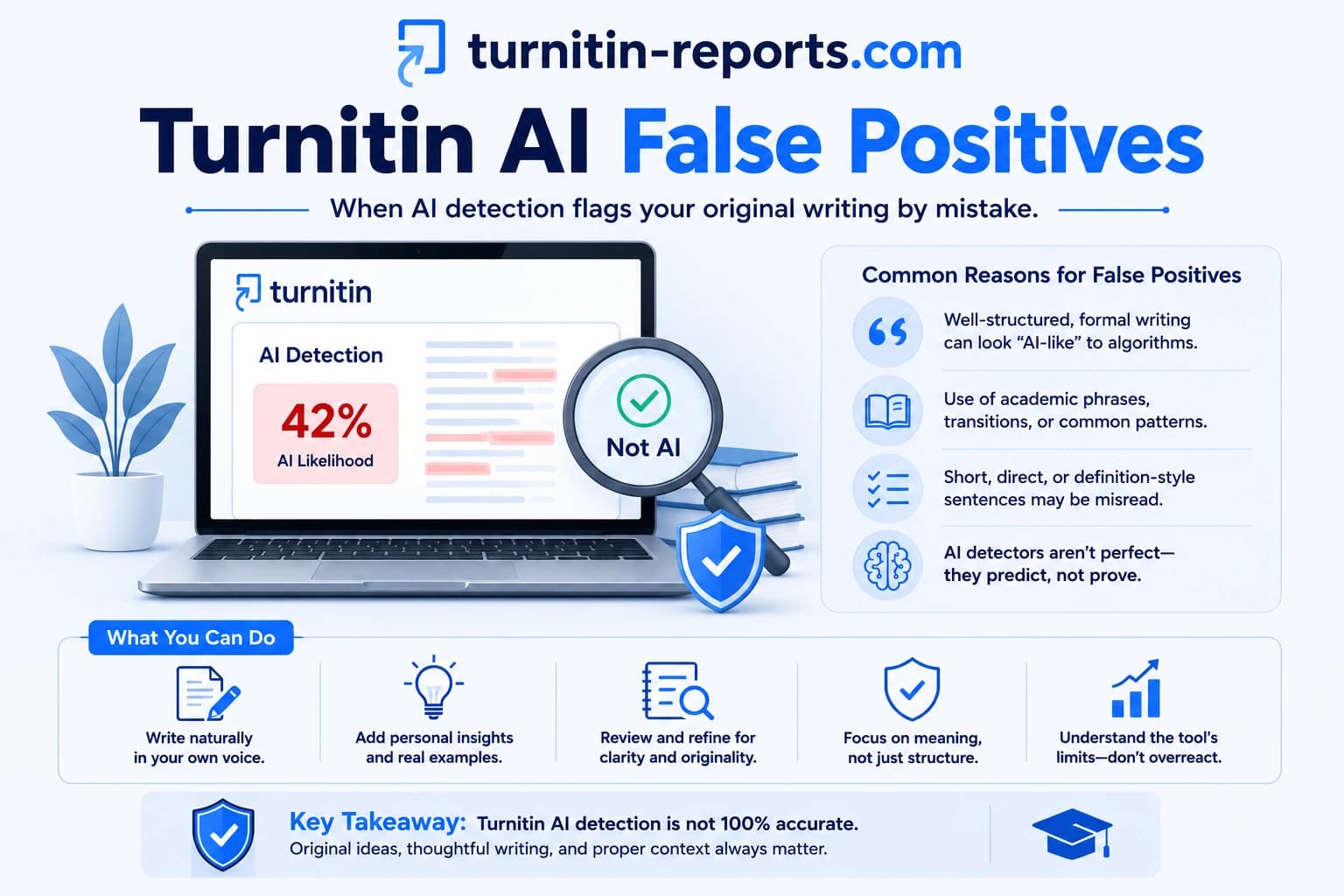
The same logic applies if the report flags an AI writing score rather than a similarity score. A high AI detection figure is not a finding of misconduct — it is a prompt for further review. The documented false-positive rate for Turnitin's AI detection makes it clear that the score alone cannot carry a formal accusation. Our post on Turnitin AI false positives covers the causes in detail, and our guide on how to appeal a Turnitin AI detection lays out the full evidence-gathering process if you are facing that specific situation.
If the instructor's manual review does not raise concern, nothing further happens. The case ends there. Only if the instructor concludes that a genuine integrity issue may exist does the process move to the next stage.
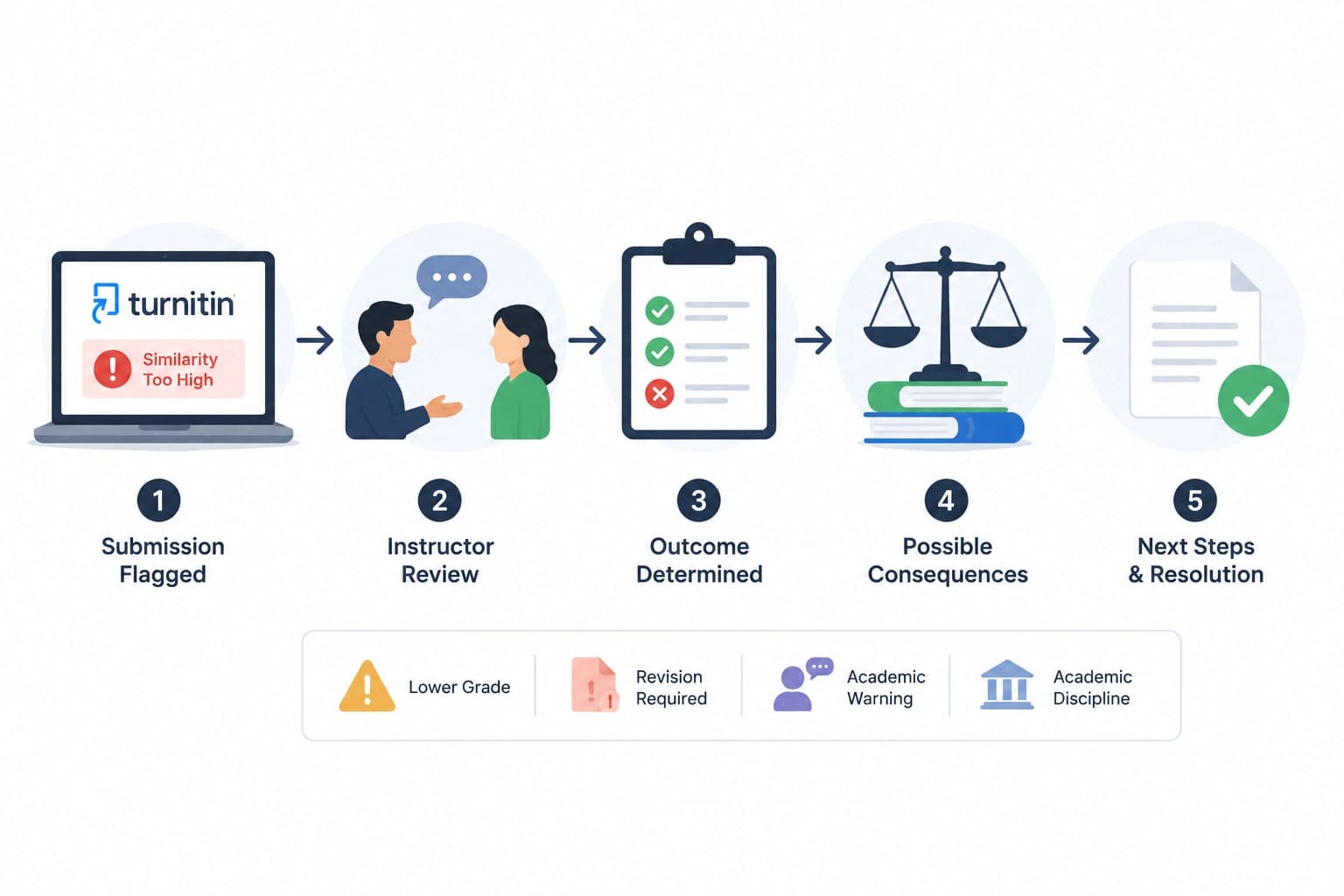
The academic misconduct process, step by step
If an instructor decides the concern warrants escalation, the process that follows is structured and — at most institutions — governed by written policy. Universities like UC San Diego and Stanford publish their full processes publicly. Most institutions follow a similar structure, though names and timelines vary:
- Initial conversation with the instructor. Before any formal process begins, most instructors will contact you directly — by email or by asking you to meet. This is not yet a formal accusation. It is an opportunity to explain context: how you sourced and cited material, whether your bibliography was excluded from the scan, whether a paraphrasing or editing tool affected your phrasing, or whether the flagged passage is a properly attributed quotation. Engage with this conversation honestly and promptly. Do not avoid it.
- Referral to the academic integrity office. If the instructor is not satisfied with the explanation, or if the evidence of a problem appears strong, the case is referred formally to the institution's academic integrity or student conduct office. You will receive written notice that a concern has been raised. This notice begins the formal institutional process.
- Investigation and evidence gathering. The academic integrity office reviews the submission, the Turnitin report, prior work where available, and any evidence you provide. You will usually be given a formal opportunity to respond in writing and to submit supporting materials. This is the stage at which your evidence matters most.
- Hearing or written review. Most institutions give students the right to present their case before a decision is made. This may be a formal hearing with a panel of faculty and students, or a written review by a designated officer. You can typically bring supporting documentation and, at some institutions, a student advocate or advisor. You cannot usually bring legal counsel into the hearing itself.
- Decision and outcome. The panel or officer determines whether a violation occurred and, if so, what the appropriate consequence is. You will receive written notification of the finding.
- Appeal. If you disagree with the outcome, most institutions allow a formal appeal, typically within 10 to 30 days of the decision. Appeals can challenge procedural errors in how the case was handled, introduce new evidence that was not previously available, or argue that the penalty imposed was disproportionate to the violation.
What the consequences look like
Consequences are graduated — they reflect the severity of the violation, whether it is a first offence, and the specific policies of your institution. The spectrum typically runs as follows:
- Formal warning or educational requirement. For minor first offences — accidental over-quoting, incomplete citation, failing to exclude self-citation — many institutions issue a formal warning with no grade penalty, or require the student to complete an academic integrity module. At this level there is often no permanent record notation.
- Grade zero on the assignment. The most common outcome for a first offence with clear evidence of unattributed borrowing is a zero on the specific submission. The rest of the course grade stands.
- Failing grade for the entire course. Where the misconduct involves a significant portion of the coursework, or where the assignment was a major assessed component, a failing grade for the module is the typical outcome.
- Suspension. Repeat violations, or a single very serious violation (submitting work purchased from an essay mill, for example), can lead to suspension from the institution for one or more semesters. This usually carries a notation on the student's internal record.
- Expulsion. Permanent exclusion is reserved for the most egregious cases or for students who have already received earlier sanctions. A misconduct finding at this level can also affect professional licensing in regulated fields.
It is worth noting that reusing your own previous work without disclosure — sometimes called self-plagiarism or double submission — is treated as a separate and distinct category of misconduct at most institutions. Our guide on whether Turnitin detects self-plagiarism covers that scenario in full, including how Turnitin's repository handles previously submitted papers.
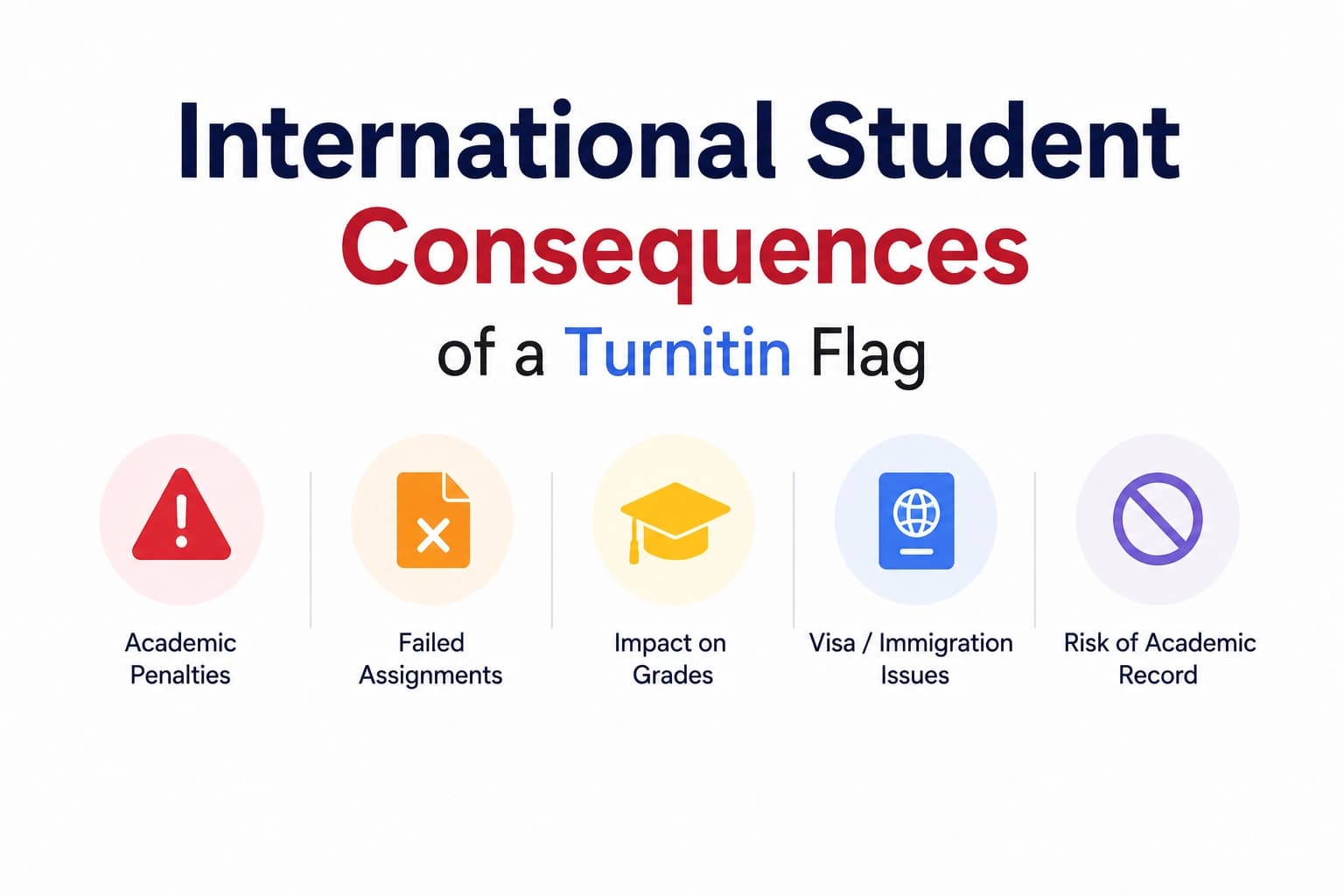
If you are an international student, the stakes are higher still. A suspension or expulsion can trigger immigration consequences — visa curtailment or study permit compliance flags — that are legally separate from but tightly linked to the academic finding. Our post on consequences for international students explains the jurisdiction-specific implications in detail.
How universities assess intent
Intent is the single most consequential variable in how a misconduct case is resolved. There is a fundamental difference between a student who forgot to insert quotation marks around a passage they intended to cite, and a student who submitted work they purchased from a contract cheating service. Academic integrity committees are well aware of this distinction, and it shapes both the finding and the consequence.
The factors that indicate accidental or low-intent violation include: an otherwise well-cited paper where only one or two passages are problematic; matches that correspond to sources already listed in the bibliography (suggesting the student had the source but failed to format the citation correctly); a consistent writing style throughout the paper; the ability to discuss the flagged material fluently in conversation; and a writing process that can be evidenced through drafts and version history.
The factors that raise concern about deliberate misconduct include: a large block of text matching a single external source that does not appear in the bibliography; a sudden shift in writing quality or register in the flagged sections compared to the student's previous work; an inability to discuss the content of the flagged material; no evidence of a writing process preceding the final submission; and — in the case of AI detection — a version history that shows the document was pasted in a single event rather than drafted over time.
None of these factors is individually determinative, but collectively they shape the committee's assessment of whether the violation was an honest mistake or a deliberate choice.
Your rights at every stage
Students have formal rights throughout the academic misconduct process, and understanding them matters because exercising them at the right time can significantly affect the outcome:
- The right to see the full Turnitin report. You are entitled to see exactly which passages were flagged and which sources they matched. A similarity percentage without the supporting detail is not sufficient for you to respond meaningfully. If you have not been shown the full report, request it explicitly.
- The right to respond before any finding is made. No institution should issue a finding of misconduct without giving the student a genuine opportunity to explain and provide evidence. If you receive a finding notice that appears to have been issued without such an opportunity, that is a procedural error that can be raised on appeal.
- The right to appeal. Almost every institution's academic integrity policy includes a formal appeals mechanism. Appeals can succeed on procedural grounds (the process was not followed correctly), on evidential grounds (new evidence was not considered), or on proportionality grounds (the penalty was excessive relative to the violation). Read your institution's policy carefully to understand the grounds available to you and the deadline for filing.
- The right to seek support. Most universities have a student ombudsman, student union advice service, or academic advisor who can help you understand the process and prepare your response. Using these services is not an admission of guilt and in most cases does not affect how the investigation proceeds.
What to do immediately if flagged
If you receive a notification that your Turnitin score is being reviewed, or that a formal concern has been raised, the steps you take in the first 48 hours are the most consequential:
- Get the full report. Ask your instructor or the academic integrity office to share the complete Similarity Report so you can see exactly which passages are flagged and what they matched against. You cannot respond effectively if you only know the overall score.
- Gather your writing evidence immediately. Export your version history from Google Docs (File → Version History → See version history) or from Microsoft Word's AutoSave history. Collect earlier drafts, research notes, annotated sources, and any browser history or search records that document your research process. Version history in particular is difficult to fabricate and is routinely persuasive to academic integrity panels.
- Respond promptly and calmly. Ignoring an initial query or delaying your response to a formal notice makes the process harder and can itself be viewed negatively by a panel. Engage early, be honest, and ask clear questions about what the process will look like at your institution.
- Read your institution's academic integrity policy. The policy is usually published on your university's website and outlines exactly what the process involves, what evidence you can submit, and what you are entitled to at each stage. Read it before any formal meeting takes place.
- Check your Turnitin score before future submissions. One of the most effective ways to avoid this situation in the future is to review your similarity score before your instructor does. Our guide on how to check your Turnitin score before submitting explains the options available through draft submissions and Turnitin Draft Coach.
Frequently asked questions
Is a high Turnitin score the same as being accused of plagiarism?
No. A high similarity score triggers a manual review by your instructor — it is not an accusation, a finding, or an automatic referral. Plagiarism is a determination made by a person after reviewing the full report in context. Many high scores have entirely legitimate explanations: correctly cited quotations, a bibliography that was not excluded from the scan, or standard academic phrasing that appears across many papers in your field. The score is where a conversation may begin. It is not where it ends.
What score is considered too high?
There is no universal threshold. Different institutions and different instructors treat scores differently — some review anything above 20%, others only escalate above 40% or higher, and some have no fixed threshold at all. The content of the flagged sections matters far more than the percentage: a 35% score driven entirely by bibliography and cited quotations is not a concern, while a 12% score with a single unattributed block of body text may be. Our post on what counts as a good Turnitin score explains the discipline-specific context that shapes what instructors actually look for.
Can you be expelled for a first offence?
Expulsion for a first offence is rare and is typically reserved for the most serious cases — submitting entirely purchased work, fabricating research data, or impersonating another student in an examination. The overwhelming majority of first offences result in a grade penalty, a formal warning, or a requirement to resubmit revised work. Most institutions operate on an explicitly graduated scale, and evidence of intent — specifically whether the violation appears accidental or deliberate — carries significant weight in the outcome.
What if the bibliography inflated the score?
This is one of the most common causes of inflated similarity scores and is straightforward to address. Ask your instructor to apply the bibliography exclusion filter and re-run the report. In most cases the body-of-work score is substantially lower once the reference list is excluded. Turnitin's bibliography filter uses machine learning to identify reference sections in English submissions and remove them from the similarity calculation. Raise this immediately if you believe it is the cause — it is a technical point most instructors will check without hesitation.
How long does the process take?
Timelines vary significantly by institution and by how complex the case is. An initial instructor conversation typically happens within a week of the report being flagged. If the case is referred formally, institutions typically aim to conclude the investigation and issue a finding within four to eight weeks, though this can extend for complex cases or during busy periods in the academic calendar. Most appeals processes add another four to six weeks. Check your institution's published academic integrity policy for the specific timelines and deadlines that apply to your case — missing an appeal deadline, in particular, typically closes that avenue entirely.
Ready to check your paper?
Get your Turnitin report in minutes.
Same report your institution generates — delivered privately, fast.
Related articles